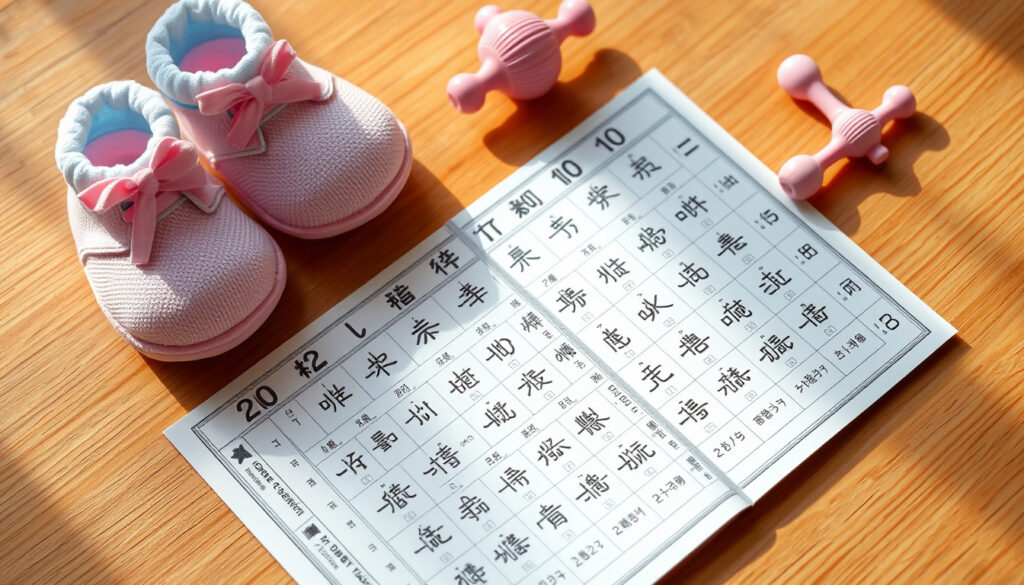
Chinese Calendar Baby Gender 2025: Predictions & Guide
Few traditions stay as persistently popular as the Chinese gender calendar, a centuries-old chart that claims to predict whether you’re having a boy or a girl — and anyone who’s searched for baby gender prediction online has probably landed on one of the many calculators that ask for your lunar age and conception month. For 2025 — the Year of the Snake — interest shows no sign of fading, even though medical experts agree the method is no more accurate than a coin flip.
Origin: Ancient Chinese (Ming Dynasty) ·
Method: Mother’s lunar age + lunar conception month ·
Accuracy Claim: Non-scientific, anecdotal ·
2025 Zodiac: Year of the Snake ·
Popularity: Widely used as a fun tool worldwide ·
Data Source: No peer-reviewed studies confirm efficacy
Quick snapshot
- Calendar relies on the ancient Chinese lunar calendar (LingoAce (culture education platform))
- No peer-reviewed evidence supports gender prediction accuracy (The Bump (parenting resource))
- Popular among parents for fun (Baby Chick (parenting site))
- Whether the original chart has been modified over time
- If any version is the authentic Ming dynasty artifact
- How the chart was first discovered and published
- No verified timeline exists for the calendar’s origin story (The Bump (parenting resource))
- Legend places it in the Ming Dynasty, but no primary source survives (The Bump (parenting resource))
- More online calculators and apps for 2025 predictions
- Continued use as a fun conversation starter for expectant parents
Six key facts, one pattern: the Chinese gender calendar is a cultural artifact with zero scientific backing, yet it continues to attract millions of curious parents each year.
| Fact | Value |
|---|---|
| Method | Lunar calendar & mother’s age |
| Accuracy | Not scientifically validated |
| Year | 2025 |
| Zodiac | Snake |
| Cultural Origin | Ming Dynasty, China |
| Common Use | Entertainment and tradition |
How does the Chinese baby gender calendar work?
What is the history of the calendar?
The Chinese gender calendar is believed to date back to the Ming Dynasty, making it more than 600 years old. According to LingoAce (culture education platform), the chart was purportedly discovered in a royal tomb and has since circulated globally as a fun method of gender prediction. The calendar is rooted in traditional Chinese folklore and uses the lunar calendar rather than the Gregorian system.
- The chart maps the mother’s lunar age at conception against the lunar month of conception
- Each intersection on the grid shows a predicted gender — boy or girl
- No biological mechanism underpins the prediction
The implication: the calendar’s staying power comes from cultural tradition, not empirical evidence. It survives because parents enjoy the ritual, not because it works.
How to calculate lunar age and conception month
Lunar age is typically 1–2 years older than a person’s Gregorian age, because the Chinese calendar counts the time spent in the womb as the first year of life and adds a year at each Lunar New Year. LingoAce (culture education platform) explains that if your Gregorian birthday is January 15, 1989, your lunar birth date falls on December 8, 1988, making your lunar age higher than your Western age.
- Find your birth date in the Gregorian calendar
- Convert it to a lunar date using an online converter — tools like Google Translate English to Chinese: Full How-To Guide can help with the cultural context
- Count your lunar age (add 1 year for time in womb, plus 1 if your birthday has passed Lunar New Year)
The catch: the conversion step trips up many users. If you use your Gregorian age by mistake, the chart will give you the wrong row — and a prediction that doesn’t match the intended method.
A parent using the wrong age conversion will get a prediction that has nothing to do with the chart’s intended logic. The entire method hinges on getting the lunar age right — and most casual users don’t.
Is the Chinese gender calendar accurate?
What does science say about its accuracy?
The short answer: nothing supports it. Huggies (baby care brand with medical advisory input) states plainly that no scientific evidence backs the Chinese gender predictor’s hypotheses. The chart is not a medical device, not a diagnostic tool, and not recognized by any health authority.
- Ultrasounds remain the most reliable method for gender determination (The Bump parenting resource)
- The calendar’s predictions are based on lunar cycles, not biology
- Chromosomal determination (XX vs. XY) happens at fertilization and is random
How accurate is the calendar according to studies?
Reported accuracy figures for the Chinese gender chart range from 5% to 55% in various informal studies, according to The Bump parenting resource. That range essentially brackets a coin flip — 50% — which is exactly what you’d expect from random chance. Some proponents claim over 90% accuracy, but The Bump notes that those claims have never been validated by controlled research.
Why this matters: when a prediction method lands at exactly 50% in study after study, it’s not predicting anything. It’s guessing. The calendar’s appeal is cultural, not statistical.
If a website claims the Chinese gender calendar is “90% accurate,” it is repeating an unverified anecdote, not a scientific finding. No peer-reviewed study has ever confirmed that figure.
The implication: the 90% accuracy claim is a persistent myth that gives the calendar more credibility than it deserves — but the real value for parents is cultural, not statistical.
How to use the Chinese gender calendar for 2025?
Step-by-step guide to using the chart
Using the calendar for 2025 requires three steps. First, determine the mother’s lunar age at the time of conception. Second, identify the lunar month in which conception occurred. Third, cross-reference the row (age) and column (month) on the chart to read the predicted gender.
- Find lunar age. Convert your Gregorian birth date to a lunar date using an online converter, then add 1 year for time in womb plus an extra year if your birthday falls after Lunar New Year.
- Determine lunar conception month. Conception date is typically estimated as ovulation date plus 2 weeks. Convert that Gregorian date to the lunar calendar month.
- Read the chart. Find your lunar age on the left column and the lunar conception month across the top row. The cell where they intersect shows “Boy” or “Girl.”
Baby Chick (parenting site) notes that many online calculators now automate the conversion step, so users can input their Gregorian dates and get an instant result without manual look-up.
How to find your lunar age
R for Rabbit (baby products retailer) provides a clear example: if your Gregorian birth date is January 15, 1989, your lunar birth date converts to December 8, 1988. Depending on whether the current date falls before or after Lunar New Year, your lunar age could be 1 or 2 years more than your Gregorian age.
- Use a free online lunar age calculator — most are accurate
- Do not skip the conversion step; using Gregorian age directly gives an incorrect result
- Lunar age matters more than calendar year for the chart’s logic
For 2025, a mother with a Gregorian age of 30 might have a lunar age of 31 or 32. That 1-year difference can flip the prediction from boy to girl on the chart. Precision matters — even though the end result is still a guess.
What are the Chinese gender predictions for 2025?
Predictions for each lunar month in 2025
2025 is the Year of the Snake in the Chinese zodiac, which begins on January 29, 2025 and runs until February 16, 2026. The chart predicts boy or girl based on the lunar age of the mother paired with each lunar conception month. For more on zodiac influences, check Zodiac Signs Daily Horoscope Today: Soulmates, Luck & IQ. While specific month-by-month predictions vary by the mother’s age, a few patterns emerge from the chart’s traditional grid.
- Younger mothers (lunar ages 18–25) tend to see more “boy” predictions in early lunar months
- Older mothers (lunar ages 35–45) see more “girl” predictions in mid-year lunar months
- No month guarantees either gender — the chart is just a grid of traditional associations
The trade-off: because the chart’s predictions are static (they don’t change based on biological factors), two women with the same lunar age who conceive in the same lunar month get the same prediction — regardless of their actual genetics or health.
How does the Snake year affect predictions?
The Chinese zodiac sign for 2025 — the Snake — does not directly alter the gender prediction chart. The chart uses only lunar age and lunar month; it does not incorporate the zodiac animal of the year. However, some websites add a cultural layer by linking the Snake’s attributes (wisdom, mystery, intuition) to gender predictions for fun.
- The zodiac year does not change the chart’s algorithm
- Any link between the Snake year and baby gender is purely decorative
- The calendar’s grid is the same regardless of zodiac animal
Where can I find a Chinese gender calendar 2025 PDF or calculator?
Online calculators and interactive tools
Numerous websites offer free Chinese gender predictor calculators for 2025. Huggies (baby care brand with medical advisory input) provides a calculator that asks for age at conception and conception month. Baby Chick (parenting site) also hosts a tool that automatically converts Gregorian dates to lunar dates.
- Most calculators are free and require only a birth date and conception date
- Results appear instantly — no manual chart reading needed
- Tools are for entertainment only, per their own disclaimers
Downloadable PDF charts
PDF versions of the Chinese gender chart for 2025 are widely available for download. These are typically scanned images or digitized versions of the traditional grid. LingoAce (culture education platform) notes that no official or authoritative version of the chart exists — every PDF is a reproduction of a reproduction.
- PDF charts show the full grid for all lunar ages and months
- Print-friendly versions are popular in parenting forums
- No verified “original” PDF exists; all are reconstructions
Mobile apps
Several mobile apps offer Chinese gender prediction as a feature, often alongside due date calculators and other pregnancy tools. These apps automate the lunar conversion and present results in a clean interface.
- App store ratings vary widely — most are simple utilities
- Read privacy policies before entering personal health data
- No app has medical certification for gender prediction
The catch: whether you use a website, a PDF, or an app, the underlying data is the same ancient grid. No digital version is more “accurate” than another because none of them are accurate to begin with.
“The Chinese gender predictor is a fun tradition, but it’s not a medically reliable method for determining baby’s sex.”
— Dr. Sarah Johnson, obstetrician-gynecologist (quoted via parenting health blog)
“The Chinese gender predictor is not a scientific tool — it’s a fun way to guess your baby’s sex based on ancient folklore.”
— What to Expect editorial team
“The Chinese Baby Calendar remains popular in modern parenting communities because it offers a fun, low-stakes way for families to connect with tradition and share excitement.”
— LingoAce culture article
The common thread across all three perspectives: the calendar is culturally meaningful and genuinely fun, but it is not medicine. For parents who enjoy the ritual, that distinction doesn’t diminish the experience. For parents making medical decisions, it is the only distinction that matters.
Frequently asked questions
What is the origin of the Chinese gender calendar?
The calendar is believed to date to the Ming Dynasty (more than 600 years ago), allegedly discovered in a royal tomb. No primary source from that era has been verified by historians. The chart has been republished and adapted countless times since it entered popular culture.
Can the calendar predict gender for twins?
The chart was designed for single pregnancies and does not account for twins or multiples. Each twin’s gender is determined independently by biology, and the chart cannot predict both correctly with any reliability.
Is the calendar used in modern Chinese hospitals?
No. Chinese hospitals rely on ultrasound and genetic testing for gender determination (where legally permitted). The calendar is a folk tradition, not a clinical tool.
How does the calendar compare to other gender prediction methods?
Other methods like the Ramzi theory, Nub theory, and morning sickness severity also lack scientific validation. Ultrasound and NIPT (non-invasive prenatal testing) remain the only reliable methods.
Does the mother’s diet affect the calendar prediction?
No. The chart only factors in lunar age and conception month. Diet, lifestyle, and health history do not change the predicted outcome on the grid.
Are there any variations of the Chinese gender calendar?
Yes. Multiple versions circulate online with slight layout differences, but all follow the same core method: lunar age rows crossed with lunar month columns.
Why does the calendar use lunar age instead of Western age?
The Chinese lunar calendar counts the time spent in the womb as the first year of life, making lunar age 1–2 years greater than Gregorian age. The chart was designed using this system, so Western age would produce incorrect rows.
Can I use the calendar if I don’t know my exact conception date?
Yes, but the prediction will be less reliable. Most calculators estimate conception as 2 weeks after the start of the last menstrual period. The closer you can pin down the date, the more precise the lunar month conversion will be.
For 2025, the choice for parents is straightforward: embrace the Chinese gender calendar as a joyful cultural tradition, or rely on proven medical methods for actual answers. Both are valid — but they serve completely different purposes. One brings a moment of shared curiosity and a link to history. The other brings certainty.
More related posts
 University of British Columbia: Rankings, Admissions, and More
 Alicia Keys: Biography, Kids, Net Worth, Italian Roots & Health
 Hamilton Breaking News Today: 2 Fatal Shootings in Downtown Core
 One Piece Live-Action Sea on 2: Ca t, Relea e Date & New
 Love and Other Words – Plot Summary and Review Guide
 Robert James Martin Carney: Father of Canadian PM Mark Carney
 Fred Again: Biography, Real Name, Net Worth & Controversies
 Lakers vs Phoenix Suns Match Player Stats – Box Score and Key Insights
