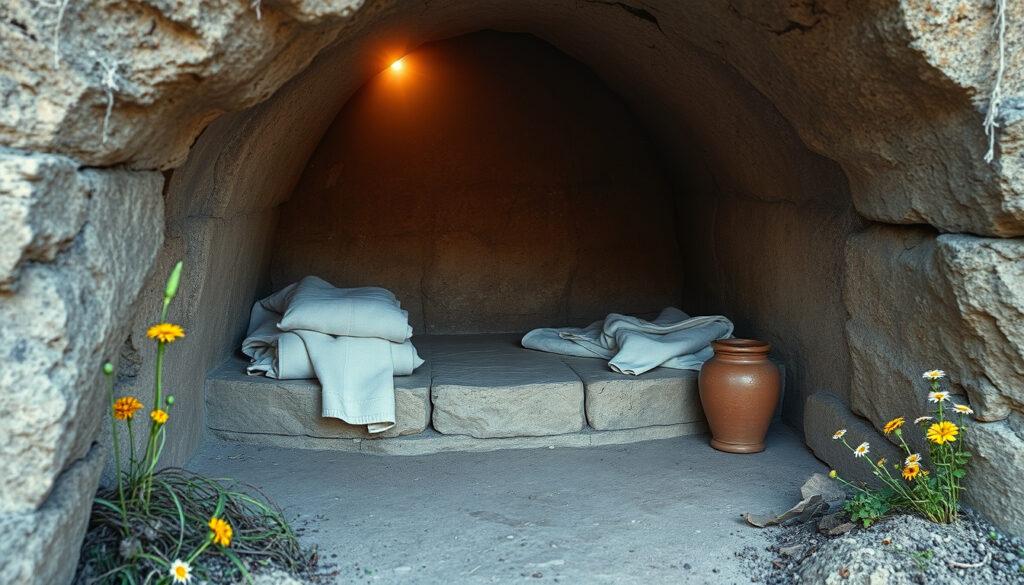
Mary Magdalene: The Real Story of the Apostle to the Apostles
Few figures in history have been as misunderstood as Mary Magdalene. For centuries, popular culture and tradition painted her as a repentant prostitute, yet the Bible never says that; in fact, she was a prominent disciple and the first witness to Jesus’ resurrection.
Canonical gospels mentioning her: 4 ·
Times ‘Mary Magdalene’ appears in the Bible (KJV): 12 ·
Centuries of tradition labeling her a prostitute (rejected 1969): 14 ·
Feast day: July 22 ·
Title given by the Catholic Church: Apostle to the Apostles
Quick snapshot
- She was a follower of Jesus who supported his ministry (Britannica (academic encyclopedia))
- She was present at the crucifixion and burial (Smithsonian Magazine (history publication))
- She was the first witness to the risen Jesus (Vatican News (official church source))
- Her life after the resurrection (National Geographic (science and history magazine))
- The exact nature of the “seven demons” (Vatican News (official church source))
- Location of her tomb and relics (Smithsonian Magazine (history publication))
- 591 AD: Pope Gregory I conflates her with the sinful woman (NPR Illinois (public radio news))
- 1969 AD: Catholic Church officially corrects the error (Catholic Answers (apologetics ministry))
- 2016 AD: Pope Francis elevates her memorial to a Feast Day (Vatican News (official church source))
- Continued scholarly research into her historical role (Britannica (academic encyclopedia))
- Growing interest in rehabilitating her image in popular culture (National Geographic (science and history magazine))
- Ongoing liturgical recognition as “Apostle to the Apostles” (St. Raphael Catholic Church (parish source))
Five key facts about Mary Magdalene, one pattern: the gap between biblical evidence and later legend is wide.
| Field | Value |
|---|---|
| Biblical Name | Mary Magdalene (from Magdala) |
| First Mention | Gospel of Luke 8:2 |
| Key Event | First witness to the Resurrection (John 20) |
| Common Mistaken Identity | Prostitute (myth started 591 AD, rejected 1969) |
| Primary Source of Legend | Gnostic texts (e.g., Gospel of Philip, Gospel of Mary) |
What is Mary Magdalene known for?
Her role as a follower of Jesus
Mary Magdalene appears in all four canonical Gospels as a devoted follower. Luke 8:2 notes that Jesus had driven out seven demons from her, and she was among the women who “provided for them out of their means” (Vatican News (official church source)). She was from Magdala, a fishing town on the Sea of Galilee (Britannica (academic encyclopedia)).
Witness to the crucifixion and resurrection
All four Gospels place Mary Magdalene at the crucifixion scene (Smithsonian Magazine (history publication)). She was present at the burial and went to the tomb on Easter morning. In John 20:11-18, the risen Jesus appears to her first and sends her to announce the resurrection to the other apostles (National Geographic (science and history magazine)).
The “Apostle to the Apostles” title
The Catholic Church honors Mary Magdalene as “Apostle to the Apostles” because she was commissioned to carry the news of the resurrection (Vatican News (official church source)). This title reflects her unique role as the first herald of the central Christian claim.
Mary Magdalene’s prominence as the first witness directly challenges the centuries-old minimisation of women’s roles in early Christianity. The Gospels consistently placed her at the most critical moment, giving her a legacy that later traditions tried to erase.
The implication: Mary Magdalene was not a minor figure. She was a leading disciple and the primary source of the resurrection testimony.
What is the true story of Mary Magdalene?
Separating biblical text from later tradition
The canonical Gospels never describe Mary Magdalene as a prostitute, nor do they identify her with the unnamed sinful woman who anoints Jesus’ feet in Luke 7 (Catholic Answers (apologetics ministry)). That conflation was introduced in 591 AD by Pope Gregory I during a homily (NPR Illinois (public radio news)).
The myth of Mary Magdalene as a prostitute
For 14 centuries, the prostitute label stuck. It was not until 1969 that the Catholic Church officially corrected the error, separating Mary Magdalene from the “sinful woman” narrative in its liturgical calendar (Catholic Answers (apologetics ministry)).
Mary Magdalene in Gnostic texts
Gnostic writings from the 2nd and 3rd centuries, such as the Gospel of Philip and the Gospel of Mary, portray her as a leading disciple and a recipient of special revelation (Britannica (academic encyclopedia)). These texts are not part of the biblical canon but show that some early Christian communities valued her authority.
While Gnostic texts elevate Mary Magdalene, they also fuel speculative theories—including the idea that she was Jesus’ wife. The canonical Gospels, which are the earliest and most reliable sources, never hint at such a relationship.
The pattern: The prostitute myth arose from a chain of misreadings, not from any historical evidence. Modern scholarship is unanimous in rejecting it.
Was Mary Magdalene a prostitute?
No. The Bible does not call her a prostitute, and no contemporary historical source does either. The association was a medieval invention (National Geographic (science and history magazine)).
Origin of the label
Pope Gregory I’s 591 AD homily identified Mary Magdalene with the sinful woman of Luke 7 and with Mary of Bethany, creating a composite figure that persisted for centuries (NPR Illinois (public radio news)).
Official correction
In 1969, the Catholic Church revised the General Roman Calendar, no longer referring to her as a penitent sinner (Catholic Answers (apologetics ministry)). The correction was reinforced by Pope Francis in 2016, who elevated her feast to a major liturgical celebration (Vatican News (official church source)).
The trade-off: The prostitute label is so deeply embedded in art, literature, and film that simply correcting it hasn’t fully dislodged it from the public imagination.
Was Mary Magdalene Jesus’ wife?
No biblical or contemporary historical text states that Mary Magdalene and Jesus were married (Britannica (academic encyclopedia)).
Origin of the theory
The “Jesus wife” theory gained widespread attention through Dan Brown’s 2003 novel The Da Vinci Code, which drew on Gnostic texts and the medieval Grail legend (National Geographic (science and history magazine)).
Scholarly consensus
Historians of early Christianity overwhelmingly reject the theory. The canonical Gospels, written within decades of Jesus’ death, never mention a wife. Even the Gnostic Gospels, which emphasize Mary’s closeness to Jesus, do not claim a marital relationship (Smithsonian Magazine (history publication)).
The implication: The “wife” theory is a modern fiction, not a historical controversy. It reflects a desire to romanticise Mary Magdalene rather than understand her actual role.
What happened to Mary Magdalene after Jesus died?
Early Christian traditions
The Bible ends Mary Magdalene’s story after the resurrection. Eastern Christian tradition holds that she traveled to Ephesus with the Apostle John and the Virgin Mary, where she died (Britannica (academic encyclopedia)).
Later legends and relics
Western tradition, particularly in France, claims she sailed to Provence, lived as a hermit in a cave, and was buried at Saint-Maximin-la-Sainte-Baume (National Geographic (science and history magazine)). Multiple locations in France claim her relics, but none of these claims are verifiable.
Her possible travels and death
No contemporary source confirms any of these traditions. The uncertainty about her later life is one of the major gaps in the historical record (Smithsonian Magazine (history publication)).
The pattern: The silence of the canonical Gospels about her later life created a vacuum that later legends eagerly filled. The result is a set of conflicting traditions, none of which can be verified.
Timeline
- c. 1st Century AD – Mary Magdalene lives in Magdala, becomes a follower of Jesus. (Britannica (academic encyclopedia))
- c. 30-33 AD – Witnesses the crucifixion and is the first to see the risen Jesus. (Smithsonian Magazine (history publication))
- 591 AD – Pope Gregory I delivers a homily conflating Mary Magdalene with the “sinful woman” and a prostitute. (NPR Illinois (public radio news))
- 1969 AD – The Catholic Church officially corrects Pope Gregory’s error, separating her from the prostitute narrative. (Catholic Answers (apologetics ministry))
- 2016 AD – Pope Francis elevates the memorial of St. Mary Magdalene to a formal Feast Day. (Vatican News (official church source))
The interpretation: A single medieval sermon created a myth that took 14 centuries to officially correct.
Clarity: Confirmed facts vs. what’s unclear
Confirmed facts
- Mary Magdalene was a historical follower of Jesus. (Britannica (academic encyclopedia))
- She was present at the crucifixion. (Smithsonian Magazine (history publication))
- She was the first witness to the resurrection in the Gospels. (Vatican News (official church source))
- She was not called a prostitute in the Bible. (Catholic Answers (apologetics ministry))
What’s unclear
- Her life and activities after the resurrection. (National Geographic (science and history magazine))
- The exact nature of the “seven demons” (illness, possession, or metaphor). (Vatican News (official church source))
- The location of her tomb and relics. (Smithsonian Magazine (history publication))
- Whether she authored or directly inspired a Gnostic gospel. (Britannica (academic encyclopedia))
The bottom line: The confirmed facts are few but solid; the unclear areas invite speculation but lack evidence.
Key quotes from scholars
“Mary Magdalene was a devoted follower of Jesus and, crucially, the first witness to the Resurrection.” — Fordham University (academic source)
“She is the first among the women following Jesus to proclaim Him as having overcome death.” — Vatican News (official church source)
These two voices—one academic, one ecclesiastical—agree on her foundational role.
For readers trying to separate fact from fiction, the choice is clear: the canonical Gospels and mainstream scholarship offer a coherent picture of Mary Magdalene as a leading disciple, while the legends of prostitute and wife are later inventions with no historical basis. Accept the biblical evidence, or continue chasing medieval myths.
youtube.com, holyapostlesgo.org, stpaulcenter.com, litpress.org, drawingontheword.com
For a deeper dive into the myths that have built up around her, this article offers a thorough look at separating Mary Magdalene facts from fiction.
Frequently asked questions
How is Mary Magdalene depicted in art?
She is often shown with long red hair, a jar of ointment, and sometimes a skull. The red hair and jar derive from the conflation with the “sinful woman” who anointed Jesus’ feet.
Are there any churches named after Mary Magdalene?
Yes, hundreds worldwide, including the Basilica of St. Mary Magdalene in Saint-Maximin-la-Sainte-Baume, France, and St. Mary Magdalene’s Church in various cities.
What is the Gospel of Mary Magdalene?
A Gnostic text discovered in the 19th century, written in Coptic, that presents Mary Magdalene as a visionary disciple who receives special teachings from Jesus.
What does the name ‘Magdalene’ mean?
It means “from Magdala,” the fishing town on the Sea of Galilee. It indicates her place of origin, not a title.
Did Mary Magdalene ever write a book?
There is no known book written by her. The Gospel of Mary is attributed to her but was likely written by an anonymous author using her name.
Is there a real tomb of Mary Magdalene?
Multiple locations claim her tomb, including the cave at Saint-Maximin-la-Sainte-Baume in France and the Basilica of St. John in Ephesus. None are historically verified.
These answers clarify common curiosities without adding new myths.
Related reading
Griselda Blanco: Separating Myths from Historical Facts — A similar fact-vs-legend approach to a historical figure.
Jacques Cartier: Historical Legacy and Controversy — Examining the legacy and controversy of a historical explorer.
Both articles use the same method of separating evidence from legend.
More related posts
 216 USD to CAD – Live Rate and Conversion Guide
 Rue McClanahan: Biography, Cause of Death, and Lasting Legacy
 Nargis Fakhri: Nationality, Biography & Career
 Imane Khelif: Gender Test, XY Chromosomes & Olympic Gold
 Nico Hulkenberg F1 Record: Longest Career Without a Win
 Yeast Infection Discharge Look Like – Color, Texture & Signs
 Simone Ashley: Ethnicity, F1 Cut, and Bridgerton Return
 Lee Van Cleef Net Worth, Death, and Angel Eyes Story
