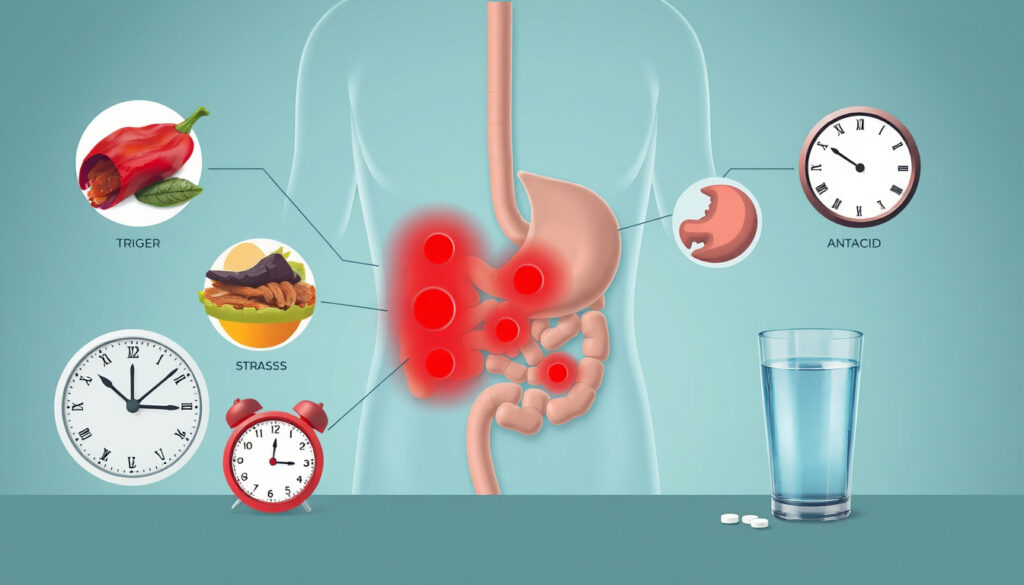
Why Does My Stomach Hurt? Common Causes, Types & Relief
You’re going about your day when a sharp twinge or a dull ache in your belly stops you short. It’s a near-universal experience, and according to the Cleveland Clinic, most abdominal pain is short-lived and not serious.
Global prevalence of abdominal pain: Up to 20% of adults affected annually (IFFGD) ·
Most common cause in primary care: Functional dyspepsia (indigestion) (Cleveland Clinic) ·
Percentage of ER visits for abdominal pain: 5–10% of all emergency visits (CDC)
Quick snapshot
- Most abdominal pain is short-lived and not serious (Cleveland Clinic) (Banner Health)
- Common causes include indigestion, gas, constipation, and food intolerances (Cleveland Clinic) (Banner Health)
- Food poisoning typically improves within a day or two (Banner Health)
- Exact cause of irritable bowel syndrome (IBS) remains unknown (healthdirect Australia)
- Why some people develop chronic abdominal pain after an infection is not fully understood (healthdirect Australia)
- The relationship between food intolerances and chronic abdominal pain is not always straightforward (healthdirect Australia)
- Acute episodes from common causes usually resolve in 24–48 hours (Banner Health)
- Chronic pain lasting 3 months or more warrants investigation (healthdirect Australia)
- If pain is severe, accompanied by fever, vomiting blood, or inability to pass stool, seek emergency care (Cleveland Clinic)
- Mild pain lasting more than a few days or recurring often should be evaluated by a doctor
The table below summarizes key statistics about abdominal pain.
| Aspect | Detail |
|---|---|
| Most common cause | Indigestion (functional dyspepsia) (Cleveland Clinic) |
| Average duration of mild episode | 24–48 hours (Banner Health) |
| Percentage requiring medical attention | About 10–15% of cases (NHS) |
| Number of abdominal pain types | 4 (visceral, parietal, referred, psychogenic) (Cleveland Clinic) |
How to relieve stomach pain?
Self-care remedies at home
- Drinking clear fluids like water or herbal tea helps hydrate and ease discomfort (Banner Health).
- Applying a hot water bottle or heating pad can relax abdominal muscles (NHS).
- Resting in a comfortable position often relieves mild cramping.
- Avoiding fatty, spicy, or dairy-rich foods reduces gastric irritation.
The implication: Most mild stomach aches respond well to simple home measures. If pain persists beyond 48 hours despite these steps, it may signal something beyond a passing upset.
Over-the-counter medications
- Antacids (e.g., Tums, Rolaids) treat indigestion and heartburn by neutralizing stomach acid (Cleveland Clinic).
- Simethicone (Gas-X) can reduce gas-related bloating and pain.
- Loperamide (Imodium) helps with diarrhea, but should not be used if fever or bloody stool is present.
What this means: OTC options target specific symptoms, but they are not a substitute for a proper diagnosis when pain is recurrent or severe.
When to avoid self-treatment
- If pain is sharp, worsens with movement, or is accompanied by a rigid abdomen, do not try home remedies — seek medical help immediately (Cleveland Clinic).
- Avoid taking pain relievers like ibuprofen or aspirin on an empty stomach, as they can irritate the stomach lining.
The catch: Self-care works within limits. Red-flag symptoms overrule any home treatment plan.
What is the main cause of stomach pain?
Common digestive causes
- Indigestion (dyspepsia) is the most frequent cause in primary care (Banner Health).
- Gas and bloating from swallowed air or fermentation in the gut produce discomfort.
- Constipation and diarrhea often cause lower abdominal pain (Banner Health).
- Food intolerances (lactose, gluten) trigger pain after eating specific foods (healthdirect Australia).
The pattern: The majority of acute stomach aches are digestive in origin and resolve without medical intervention.
Infectious causes
- Gastroenteritis (stomach flu) and food poisoning are leading infectious causes (Banner Health).
- Urinary tract infections can also present with abdominal pain (healthdirect Australia).
- Appendicitis causes sharp pain that typically moves to the lower right side and requires emergency surgery.
Why this matters: Infectious causes can progress quickly. Pain accompanied by fever or vomiting needs prompt evaluation.
Chronic conditions
- Irritable bowel syndrome (IBS) is a common chronic cause with no structural damage (healthdirect Australia).
- Peptic ulcers create gnawing pain that may improve or worsen with food depending on location (Cleveland Clinic).
- GORD/reflux, inflammatory bowel disease, and coeliac disease are other chronic players (healthdirect Australia).
The trade-off: Chronic conditions often require long-term management, but many respond well to diet changes and medication.
What are the four types of stomach pain?
Understanding the four categories helps pinpoint where the pain originates. One sentence framing: These types are defined by the nerve pathways and tissues involved.
Visceral pain
- Visceral pain is dull, poorly localized, and often comes from organs like the stomach, intestines, or gallbladder (Cleveland Clinic).
- It feels like a deep ache or cramp and is hard to point to one spot.
The pattern: Visceral pain is common and usually less alarming than sharp, localized pain.
Parietal pain
- Parietal pain is sharp, well-localized, and caused by inflammation of the peritoneal lining (Cleveland Clinic).
- It often worsens with movement or coughing.
What this means: Parietal pain is a red flag — it can signal appendicitis, peritonitis, or other serious conditions.
Referred pain
- Referred pain is felt at a distance from the actual source (e.g., heart pain felt in the abdomen or shoulder) (healthdirect Australia).
- This occurs because sensory nerves from different areas converge at the spinal cord.
The catch: Referred pain can be misleading. A heart attack may present as upper abdominal discomfort, delaying diagnosis.
Psychogenic pain
- Psychogenic pain has no identifiable physical cause and is associated with stress, anxiety, or depression (Banner Health).
- It is real to the patient but requires a different treatment approach focused on mental health.
Why this matters: Psychogenic pain is often underrecognized. Acknowledging the mind-gut connection is crucial for effective management.
How to tell if stomach pain is serious?
Red-flag symptoms
- Severe pain that comes on suddenly, a rigid abdomen, or pain that wakes you from sleep (Cleveland Clinic).
- Fever, vomiting blood, blood in stool, or black, tarry stools.
- Inability to pass gas or stool (possible bowel obstruction).
The pattern: Red flags are clear and should not be ignored. They often require immediate medical imaging or surgery.
When to go to the emergency room
- Pain after an injury or accident.
- Pain accompanied by chest discomfort or shortness of breath.
- Severe pain that prevents you from standing still or finding a comfortable position (Cleveland Clinic).
What this means: The ER is for emergencies. If you have any red flag, do not wait for a primary care appointment.
When to schedule a doctor’s appointment
- Mild pain that lasts more than a few days or keeps coming back.
- Unexplained weight loss or loss of appetite.
- Chronic conditions like IBS or ulcer symptoms that are not controlled with current treatment.
The implication: Recurrent or persistent pain deserves a thorough evaluation, even if it seems mild.
Why does my stomach hurt when I eat?
Overeating and eating too fast
- Overeating stretches the stomach and triggers discomfort (Banner Health).
- Eating quickly can cause you to swallow air, leading to bloating and gas.
The catch: Slowing down and eating smaller portions often solves this without medication.
Food intolerances and allergies
- Lactose intolerance causes cramping, bloating, and diarrhea shortly after dairy consumption (healthdirect Australia).
- Gluten sensitivity or coeliac disease produces pain and digestive upset after wheat, barley, or rye.
Why this matters: Food intolerances are often underdiagnosed. A food diary can help link symptoms to specific items.
Acid reflux and GERD
- Gastroesophageal reflux (GERD) produces burning pain behind the breastbone that can radiate to the throat (Banner Health).
- It often worsens after large meals, when lying down, or after consuming acidic foods.
The pattern: GERD pain is positional and meal-related. Elevating the head while sleeping and avoiding trigger foods can help.
Gastritis and ulcers
- Gastritis (inflammation of the stomach lining) causes a gnawing or burning pain in the upper abdomen (healthdirect Australia).
- Peptic ulcers create pain that may improve or worsen with food, depending on whether the ulcer is in the stomach or duodenum (Cleveland Clinic).
The implication: Ulcer pain that changes with eating is a classic sign. Testing for H. pylori is often needed.
Confirmed facts & what remains unclear
Confirmed facts
- Stomach pain from gas or indigestion is common and not dangerous (Cleveland Clinic).
- Acute appendicitis requires emergency surgery (healthdirect Australia).
- IBS is a functional disorder with no structural damage (healthdirect Australia).
What’s unclear
- Exact cause of IBS remains unknown (multifactorial) (healthdirect Australia).
- Why some people develop chronic abdominal pain after infection is not fully understood.
- The relationship between food intolerances and chronic abdominal pain is not always straightforward.
Most abdominal pain is short-lived and not serious.— Cleveland Clinic (a leading medical institution)
Simple self-care measures like drinking water, resting, and applying a warm compress can help most stomach aches resolve within 24 to 48 hours.— NHS (UK’s national health service)
Indigestion is often caused by overeating, stress, or certain foods, and can produce discomfort, bloating, and burning.— Banner Health (a large nonprofit health system)
For the average adult dealing with abdominal pain, the choice is clear: monitor mild symptoms with rest and hydration for 48 hours, but if red flags like severe pain, fever, or blood appear, head to the ER or call your doctor without delay. You should trust your gut — literally and figuratively.
hopkinsmedicine.org, mayoclinic.org, blog.providence.org, carolinadigestive.com
Frequently asked questions
Can stress cause stomach pain?
Yes, stress and anxiety can trigger abdominal pain through the gut-brain axis. Stress can worsen IBS symptoms and cause “butterflies” or cramping.
What should I eat when my stomach hurts?
Bland, easy-to-digest foods like bananas, rice, applesauce, and toast (the BRAT diet) are often recommended. Avoid spicy, fatty, or dairy-rich foods.
Is stomach pain a sign of pregnancy?
Implantation cramping can occur early in pregnancy, but stomach pain alone is not a reliable sign. A pregnancy test is the best way to confirm.
How long does a stomach ache usually last?
Most episodes from common causes resolve within 24 to 48 hours (Banner Health). Chronic pain lasting 3 months or more requires evaluation.
Does drinking milk help stomach pain?
Milk can temporarily coat the stomach and soothe heartburn, but it may worsen symptoms if you are lactose intolerant. Water or herbal tea is safer.
What over-the-counter medicine is best for stomach pain?
It depends on the cause: antacids for indigestion, simethicone for gas, and loperamide for diarrhea. Always read labels and consult a pharmacist if unsure.
Can stomach pain be caused by anxiety?
Absolutely. Anxiety can cause “nervous stomach,” cramping, and nausea. Cognitive behavioral therapy and stress management often help.
Related reading
More related posts
 NFL News and Rumors: Fact-Checked Trades & Extensions
 Bob Marley One Love – From Assassination to Peace Concert
 Dupray Neat Steam Cleaner Recall: Boiler Risks & Refund
 Sunnybrook Health Sciences Centre: Rooms, Rankings & Codes
 What Is The Wordle Today – March 31 #1746 Hints & Answer
 Is Pepper Spray Legal in Canada? Rules & Alternatives
 Is It a Snow Day Today – Latest School Closures
