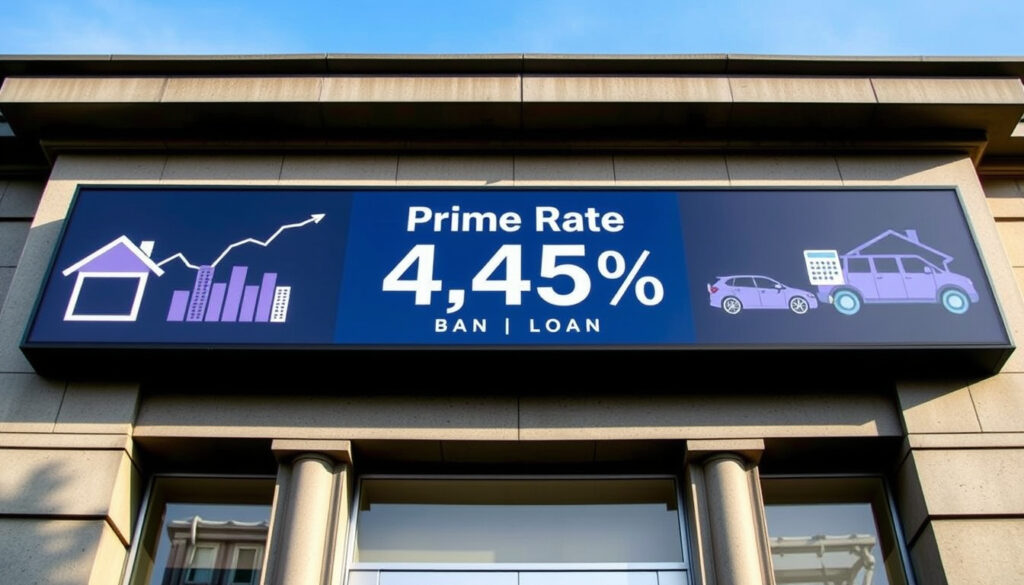
CIBC Prime Rate Today – Current 4.45%, History & Loan Impacts
CIBC’s prime rate stands at 4.45% as of April 14, 2026, positioning the bank alongside other major Canadian lenders in setting a consistent benchmark for variable-rate borrowing products. This rate directly influences monthly payments on mortgages, lines of credit, and other variable loans across the country.
The prime rate serves as the foundation for most variable-rate lending in Canada, fluctuating in response to the Bank of Canada’s target overnight rate. When the central bank adjusts its policy rate, CIBC and other Big Five banks typically follow suit within the same day or the next business day.
For borrowers holding variable-rate products, even small shifts in the prime rate can translate to meaningful changes in monthly budgets. Understanding how this rate functions and what drives its movements helps consumers make more informed decisions about their existing and prospective loans.
What is the CIBC Prime Rate Today?
The current CIBC prime rate is 4.45%, a figure that reflects the latest adjustment made by the bank in response to monetary policy decisions. This rate applies to variable-rate products and serves as the starting point from which margins are added or subtracted to determine actual borrowing costs.
CIBC updates its prime rate dynamically, with official postings on its website displaying the current value through dynamic feeds. All major Canadian banks typically align their prime rates within the same timeframe.
Key details about the current rate are summarized below:
| Metric | Value |
|---|---|
| Current CIBC Prime Rate | 4.45% |
| Last Change Date | October 29, 2025 |
| Previous Rate | 4.70% |
| Change Magnitude | -0.25% (cut) |
| Bank of Canada Overnight Target | 2.25% (approximate) |
| Spread Above BoC Rate | Approximately 2.20% |
| Big Five Banks Alignment | All at 4.45% |
Key Insights for Borrowers
- The October 2025 rate cut of 0.25 percentage points marked the most recent adjustment to CIBC’s prime rate, bringing it down from 4.70% to the current 4.45% level.
- Variable-rate mortgage holders at CIBC can currently access rates as low as 3.95% (prime minus 0.50%), representing a competitive option compared to fixed-rate alternatives.
- For every $100,000 of variable-rate mortgage debt, the October cut translates to approximately $41.67 in monthly interest savings.
- Personal lines of credit at CIBC start at 5.45% (prime plus 1%), while business lines of credit begin at 4.45% (at prime).
- Fixed-rate products are not affected by prime rate movements, as they are set at origination based on prevailing market conditions.
- The prime rate mechanism creates a ripple effect across approximately $1.8 trillion in Canadian household debt, much of which carries variable-rate terms.
Recent Changes and CIBC Prime Rate History
The trajectory of CIBC’s prime rate over recent months reflects a broader trend of monetary policy easing in Canada. The most recent confirmed change occurred on October 29, 2025, when CIBC reduced its prime rate by 25 basis points from 4.70% to 4.45%. This adjustment aligned with the Bank of Canada’s decision to ease its target overnight rate, a move designed to stimulate economic activity by reducing borrowing costs.
The October 29, 2025 cut represented a 0.25% reduction, matching the Bank of Canada’s policy easing initiative. Some analyses reference a cumulative 0.50% reduction in certain contexts, though the most recent single change was 0.25%.
The timeline below traces the most recent rate adjustments:
- October 29, 2025: CIBC decreased prime rate from 4.70% to 4.45% (0.25% cut), matching BoC policy easing.
- Earlier 2025 adjustments: Historical records indicate additional changes earlier in the year, with the rate reaching 4.95% at certain points before declining to current levels.
- Historical context: Canadian prime rates have experienced significant volatility over decades, reaching highs of 13.25% in November 1980 before a long-term gradual decline.
The pattern of rate movements demonstrates how CIBC and other major banks respond almost immediately to Bank of Canada policy decisions. This synchronization ensures consistency across the Canadian banking sector, though individual borrowers may still negotiate personalized rates that differ from the posted prime.
What is a Prime Rate and How is it Determined?
The prime rate represents the benchmark interest rate that Canadian banks use as a foundation for pricing variable-rate lending products. It serves as the base rate from which banks calculate the actual interest charged to borrowers, adding or subtracting a margin depending on the product type, borrower creditworthiness, and market conditions.
Relationship to the Bank of Canada Overnight Rate
CIBC sets its prime rate primarily in response to the Bank of Canada’s target overnight rate, which influences short-term borrowing costs among financial institutions. The prime rate typically sits approximately 2.20% above the Bank of Canada’s overnight target, though the exact spread can vary slightly with policy shifts. When the Bank of Canada raises or lowers its overnight rate, CIBC typically mirrors the change on the same day or the following business day, ensuring that the financial system remains aligned with monetary policy objectives.
Why Banks Coordinate on Prime Rate
Canada’s five major banks—CIBC, RBC, BMO, Scotiabank, and TD—generally maintain consistent prime rates. This coordination is not formal collusion but rather reflects the shared reliance on the same underlying policy mechanism. Since all banks access the same overnight lending market and face similar regulatory requirements, their prime rates naturally converge to comparable levels. The Bank of Canada’s influence flows through the financial system, and all institutions adjust accordingly to maintain competitive positioning while meeting regulatory standards.
While posted prime rates remain consistent across major banks, borrowers with strong credit profiles may negotiate rates below the posted prime. CIBC and other institutions often offer discounted rates to qualified applicants, particularly for mortgage renewals and refinances.
How Does the CIBC Prime Rate Affect Loans and Mortgages?
The prime rate exerts direct influence on any borrowing product structured as variable-rate, meaning the interest charged fluctuates as the prime rate moves. For homeowners and consumers with variable-rate mortgages, lines of credit, or personal loans, changes in the prime rate translate into corresponding adjustments to their interest costs and monthly payments.
Impact on Variable-Rate Mortgages
Variable-rate mortgages at CIBC are quoted as a spread relative to prime, expressed as Prime plus or minus a percentage point. Current examples include rates of 3.95% (Prime minus 0.50%) and 4.00% (Prime minus 0.45%). These products mean that when prime rate decreases, borrowers pay less interest immediately. Conversely, if the prime rate rises, payments increase. Some variable-rate mortgages feature fixed monthly payments with the interest portion adjusting, while others allow the payment amount itself to fluctuate.
| Mortgage Balance | Monthly Interest Reduction (Oct 2025 Cut) |
|---|---|
| $100,000 | $41.67 less per month |
| $500,000 | $208.33 less per month |
Fixed-Rate Products Remain Unaffected
Fixed-rate mortgages and loans operate differently. These products lock in an interest rate at origination based on prevailing conditions, and that rate remains constant throughout the term. For example, a 5-year fixed mortgage at 4.49% will not change regardless of what happens to the prime rate during those five years. This distinction makes fixed-rate products appealing to borrowers who prioritize payment predictability over potential savings from rate movements.
| CIBC Mortgage Option | Current Rate |
|---|---|
| 5-year fixed | 4.49% |
| 5-year variable | 3.95% |
| 3-year fixed | 4.64% |
Lines of Credit Pricing
Personal lines of credit at CIBC are priced at Prime plus 1%, resulting in a current rate of 5.45%. Business lines of credit often carry rates at Prime with no margin, currently sitting at 4.45%. Home equity lines of credit typically follow similar structures, with the prime rate serving as the reference point for calculating total borrowing costs.
CIBC Prime Rate Compared to Other Canadian Banks
As of April 14, 2026, CIBC’s prime rate of 4.45% matches exactly what all other Big Five Canadian banks are offering. This uniformity reflects the interconnected nature of Canadian monetary policy and the shared influence of the Bank of Canada’s overnight rate target across the financial system.
| Canadian Bank | Current Prime Rate |
|---|---|
| CIBC | 4.45% |
| RBC Royal Bank | 4.45% |
| BMO | 4.45% |
| Scotiabank | 4.45% |
| TD Bank | 4.45% |
While the posted prime rate remains consistent across major institutions, actual borrowing costs can vary based on the spreads offered to individual customers. Borrowers with strong credit histories and existing relationships with a particular bank may secure rates below the posted prime through negotiation or promotional offers. Additionally, some smaller financial institutions and alternative lenders may offer rates that differ from the Big Five benchmark.
When Prime Rates Diverge
Historical sources indicate that occasionally, one bank may update its prime rate before others respond to Bank of Canada policy changes. However, such divergences are typically temporary, lasting only hours or a day. In the current period, all major banks have converged on the 4.45% figure. One older source referenced a CIBC rate of 4.95%, but more recent and frequently updated sources consistently confirm the 4.45% level.
Facts and Uncertainties Regarding CIBC Prime Rate
Official CIBC rate pages, multiple financial comparison platforms, and Bank of Canada data consistently report the current prime rate at 4.45%. The October 29, 2025 change from 4.70% to 4.45% is confirmed across multiple independent sources.
While the current rate is firmly established, the timing and direction of future changes depend entirely on Bank of Canada policy decisions, which respond to economic indicators not yet available. Any forecast about when the next rate adjustment might occur would be speculative rather than fact-based.
| Established Facts | Forward-Looking Unknowns |
|---|---|
| Current rate: 4.45% | Next rate change date (unconfirmed) |
| Last change: October 29, 2025 | Direction of next change (rate hike or cut) |
| Change magnitude: -0.25% | Magnitude of next adjustment |
| Aligned with BoC policy | Upcoming BoC meeting decisions |
| Matches all Big Five banks | Potential impact on household debt |
Economic Context: Why the Prime Rate Matters
The prime rate functions as a critical transmission mechanism connecting monetary policy decisions to everyday borrowing costs for Canadians. When the Bank of Canada adjusts its overnight rate target, it aims to influence economic activity by making borrowing more or less expensive. The prime rate translates these policy intentions into concrete costs that affect mortgage payments, line of credit charges, and business lending terms.
With approximately $1.8 trillion in Canadian household debt outstanding, much of which carries variable-rate terms, movements in the prime rate have significant aggregate effects on consumer spending power and financial stability. A lower prime rate reduces the interest burden on existing variable-rate debt, freeing up cash flow for consumers. Conversely, a rising prime rate increases debt servicing costs across the economy.
The current 4.45% prime rate represents a moderate level by historical standards. During the early 1980s, Canadian prime rates reached double digits, peaking at 13.25% in November 1980. While the current rate is substantially lower, it remains higher than the lows seen in the early 2000s and 2010s, reflecting the interest rate cycle that has characterized the post-pandemic period.
Sources and Official References
Several authoritative sources inform this report on CIBC’s prime rate. CIBC publishes its current rates directly through its official website, updating the figures dynamically as changes occur. The Bank of Canada maintains detailed records of its target overnight rate and provides transparency about monetary policy decisions that influence prime rate movements across the banking sector.
Financial comparison platforms including RateHub.ca and NerdWallet Canada aggregate rate data from multiple sources, offering side-by-side comparisons that help consumers understand how CIBC’s offerings align with competitors. Canadian Mortgage Trends provides specialized coverage of mortgage rate developments, including the specific timeline of changes implemented by CIBC.
CIBC updates its prime rate dynamically, with official postings on its site showing the current value via dynamic feeds.
— CIBC official website, Interest Rates section
Summary: Understanding Your CIBC Prime Rate
CIBC’s current prime rate of 4.45% as of April 14, 2026, reflects the bank’s response to recent Bank of Canada policy easing and positions it in line with all other Big Five Canadian banks. This rate directly affects the cost of variable-rate mortgages, lines of credit, and other floating-rate products. The most recent change occurred on October 29, 2025, when the rate decreased by 0.25 percentage points from 4.70%. While fixed-rate products remain unaffected by prime rate movements, variable-rate borrowers experience immediate changes to their interest costs and monthly payments when the prime rate adjusts. For borrowers seeking to understand their current costs or evaluate refinancing options, monitoring the prime rate provides valuable insight into broader borrowing conditions. Those interested in related financial comparisons may find the 224 USD to CAD exchange rate analysis useful alongside this rate information.
Frequently Asked Questions
Does CIBC’s prime rate change daily?
CIBC’s prime rate does not change daily. It typically remains stable until the Bank of Canada adjusts its target overnight rate, at which point CIBC matches the change within the same day or next business day.
What is the Bank of Canada overnight rate?
The Bank of Canada overnight rate is the interest rate at which major financial institutions borrow and lend one-day funds among themselves. It serves as the central bank’s primary monetary policy tool and directly influences the prime rates offered by commercial banks.
How much can I save on my mortgage after the October 2025 rate cut?
For every $100,000 of variable-rate mortgage debt, the October 2025 cut saves approximately $41.67 per month. A $500,000 mortgage would see monthly savings of roughly $208.33.
Is the prime rate the same at all Canadian banks?
The posted prime rate is effectively the same across all Big Five Canadian banks, currently sitting at 4.45%. Minor temporary differences may occur briefly during rate transitions, but they quickly align.
How is CIBC’s prime rate determined?
CIBC sets its prime rate by adding approximately 2.20% to the Bank of Canada’s target overnight rate. When the central bank adjusts its rate, CIBC typically follows suit immediately.
What’s the difference between variable and fixed mortgage rates at CIBC?
Variable rates fluctuate with CIBC’s prime rate, currently offering options around 3.95%. Fixed rates remain constant for the term, with current 5-year fixed options at approximately 4.49%.
Can I negotiate a rate lower than CIBC’s posted prime?
Yes, borrowers with strong credit profiles may negotiate rates below the posted prime. CIBC and other banks often offer discounted rates to qualified applicants, particularly for mortgage renewals and refinances.
More related posts
 When Is Ramadan 2025? Dates by Country, Eid & Rules
 Playa Hermosa Costa Rica: Beaches, Safety & Activities
 IELTS General Reading Practice Test: Free PDFs & Answers
 ETF vs Mutual Fund: Differences, Pros & Which to Choose
 Indian Population in Canada: Statistics, Cities & Trends
 Alex Hall: Relationships, Kids, and Selling the OC
 Rapid Response COVID Test: How to Use, Accuracy & HSE Guide
 Pierce Brosnan Movies and TV Shows: Complete Guide
