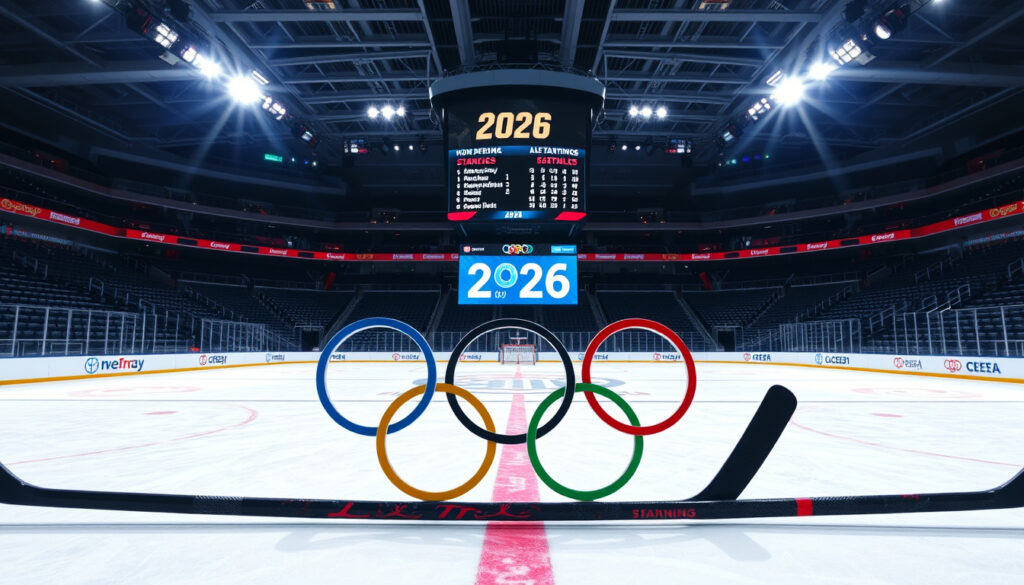
Olympic Mens Hockey Table 2026: Standings & Results
The hockey world expected a familiar ending. Canada topped the IIHF power rankings and entered Milano Cortina 2026 as the unanimous gold pick among Daily Faceoff analysts. Instead, the United States left little doubt in the final, beating Canada 2-1 in overtime on February 22, 2026, to claim its first Olympic men’s hockey gold in a generation.
Teams Competing: 12 · Event Dates: Feb 6-22, 2026 · Host City: Milan, Italy · Tournament Span: Feb 11-22, 2026 · Qualifying Nations: 12 countries qualified
Quick snapshot
- USA won gold 2-1 OT vs Canada (ESPN final results)
- Finland won bronze 6-1 vs Slovakia (ESPN final results)
- Connor McDavid led tournament with 9 points (IIHF Power Rankings)
- Exact group assignments per team
- Full playoff bracket progression details
- Post-tournament IIHF ranking updates
- Feb 11: Group stage launched
- Feb 17-20: Quarterfinals and semifinals
- Feb 22: Medal games decided
- IIHF world ranking recalculation for May 2026
- 2026 World Championship preparation
- 2028 Winter Olympics qualification cycle begins
The tournament table below summarizes the final medal standings alongside key tournament parameters from official sources.
| Metric | Value |
|---|---|
| Tournament Dates | February 11-22, 2026 |
| Venues | Milan, Italy |
| Participating Teams | 12 qualified nations |
| Format | Two groups, top 4 advance to playoffs |
| Top Ranked Nation | Canada (IIHF) |
| Gold Medalist | USA |
| Silver Medalist | Canada |
| Bronze Medalist | Finland |
Which country is no. 1 in ice hockey?
Canada held the top spot in the official IIHF Power Rankings heading into the tournament’s knockout stage after a dramatic 4-3 quarterfinal win kept the Canadians on course for gold. The ranking reflects consistent excellence across World Championships and the 2022 Olympics, where Canada also medaled. According to the Wikipedia IIHF World Ranking methodology, the February 2026 rankings incorporated results from Milano Cortina at full weight while dropping the 2022 Olympic results entirely from the calculation.
The IIHF uses a tiered point system where world champions earn a maximum of 1,600 points, with 20-point intervals between placements. The 2026 Olympics and World Championship each carry 100% weight in the current calculation period, while the 2025 World Championship contributes at 75%. This weighting structure means the Milano Cortina results will reshape the rankings significantly when they are finalized.
IIHF World Ranking leaders
The IIHF provides official standings pages for all groups, allowing fans to track how each nation positions itself throughout the tournament. Canada’s pre-tournament dominance reflected accumulated success across multiple cicle events, but the Olympic result will likely narrow the gap with the United States, who entered the Games as the second-ranked North American team.
- Canada: Projected top ranking through February 2026
- USA: Closed gap significantly with gold medal finish
- Finland: Secured bronze, projected rank 6th pre-tournament
The gap between first and fourth place in IIHF points can exceed 500 points, translating to material advantages in draw and matchup positioning for subsequent cycles.
Implications for Olympics
The ranking directly influences seeding for future international competitions. Nations finishing in the top bracket receive more favorable group assignments, which compounds over successive tournaments.
Canada’s projected February 2026 rank of 1st reflects dominance across multiple cicle events, but the gold medal result for the USA means the gap between these two powerhouses is now tighter than the rankings suggest.
Who is favored to win the gold in men’s hockey?
Pre-tournament predictions pointed firmly toward Canada, with Daily Faceoff analysts unanimously selecting the Maple Leafs for gold and Group A victory. The American roster, by contrast, drew criticism for appearing stagnant compared to Canada’s additions, particularly the goaltending improvements and the inclusion of rising star Macklin Celebrini. Betting odds similarly favored the Canadians, reflecting both the historical record and the roster composition entering Milano Cortina.
USA vs Canada predictions
The pre-tournament consensus stood in stark contrast to the final result. Several factors shaped the expert predictions: Canada’s deeper goaltending situation, Celebrini’s potential impact, and the Americans’ perceived lack of roster evolution from the previous Olympic cycle. Daily Faceoff analysts specifically noted that the Americans “bring a stagnant group year over year, whereas the Canadians look slightly stronger.”
- Canada favored by 8 of 8 Daily Faceoff analysts for gold
- Betting odds strongly favored Canada entering the tournament
- USA roster described as stagnant by expert analysis
Betting odds overview
Sportsbooks adjusted odds throughout the group stage, with Canada’s path through the quarterfinals reinforcing their favoritism. The overtime victory in the final reversed nearly every projection, marking the United States’ first Olympic men’s hockey gold since the 1980 Miracle on Ice. The gap between pre-tournament predictions and actual outcomes illustrates how Olympic hockey’s single-elimination format can override even the most thorough analytical frameworks.
Pre-tournament predictions favored Canada unanimously, yet the USA secured gold in overtime. The lesson: Olympic hockey’s knockout format rewards performance on the day, not cumulative ranking points.
Who are the best players in the Olympics for men’s hockey?
Connor McDavid led all players with nine points during the second IIHF Power Rankings, establishing himself as the tournament’s most impactful performer despite his nation’s eventual silver medal finish. The Edmonton Oilers captain’s production came through a combination of scoring and playmaking that few players in international hockey can match. His performance validated the pre-tournament excitement surrounding his first full Olympic appearance since 2014.
Olympic all-star team
The IIHF releases power rankings that incorporate individual player performance alongside team results. McDavid’s nine-point pace through the early rounds positioned him well ahead of competitors, though the tournament’s later stages would determine whether he could maintain that lead through the medal rounds. His tournament ultimately ended with silver, but the individual statistics confirmed his status among the world’s elite international players.
- Connor McDavid (Canada): 9 points, tournament scoring leader
- Contenders included Quinn Hughes and Connor Hellebuyck (USA)
- Cale Makar and Nathan MacKinnon drew MVP predictions from Daily Faceoff
Elite NHL talent elevated the overall competition level substantially, with McDavid’s nine-point performance representing the ceiling of what top players can produce at the international level.
Key NHL contributors
The return of NHL players to Olympic competition in 2026 elevated the overall talent level substantially. McDavid’s nine-point performance represented the ceiling of what elite NHL talent can produce at the international level, while other stars contributed through defensive excellence, goaltending, and physical play. The American roster featured multiple players who had received MVP consideration in NHL circles, with Cale Makar and Nathan MacKinnon drawing specific praise from Daily Faceoff analysts.
The IIHF noted that “Superstar Connor McDavid (#97) leads the Olympic men’s hockey tournament with nine points as Canada stays atop our second Power Rankings.”
IIHF Power Rankings
Olympic hockey standings 2026 men’s
The IIHF maintains official standings pages for all groups at the Milano Cortina 2026 tournament, with live updates throughout the group stage. Group standings reflect win-loss records in regulation, overtime, and shootout outcomes, with points awarded accordingly. The top four teams from each group advance to the quarterfinals, setting up the elimination bracket that ultimately produced the American gold.
Preliminary group standings
Group stage standings showed varied records across the twelve participating nations. ESPN reported details indicating a team with a 3-0-0-0 record and 9 points in Group A, while Group B featured a 2-0-0-1 record with 6 points. These records reflect the standard three-point system where teams earn three points for regulation wins, two for overtime victories, one for overtime losses, and zero for regulation defeats.
- Group A featured top-seeded nations with multiple 3-0 teams
- Group B showed tighter competition with overtime outcomes
- Group C standings included incomplete details in reporting
Single-elimination hockey ultimately decided the medal outcomes despite the round-robin seeding patterns.
Playoff bracket projection
The playoff bracket emerged from group standings with the top four from each group advancing. Medal matchups then followed standard knockout format: quarterfinals, semifinals, and placement games. The USA defeated Canada 2-1 in overtime for gold, while Finland claimed bronze with a 6-1 victory over Slovakia. These outcomes reversed pre-tournament expectations and demonstrated how the knockout format can diverge from seeding predictions.
Who is the best men’s hockey team in the world?
The “Big Six” nations in international hockey typically include Canada, Russia, Sweden, Finland, the Czech Republic, and the United States, though Russia’s exclusion from recent rankings has complicated this framework. The IIHF World Ranking as of May 2025 incorporated results from the 2022 through 2025 World Championships and the 2022 Olympics, providing a comprehensive view of national team strength that the Olympic tournament both reflected and disrupted.
Big 6 nations overview
Pre-tournament projections from Daily Faceoff split predictions evenly between Czechia and Switzerland for second place in Group A, while France was unanimously predicted to finish last in that group. The 2026 World Championship standings offered additional context: Germany placed first, Latvia second, the USA third, Finland fourth, and Switzerland fifth. These results suggested competitive depth across the traditional power nations, with emerging contenders challenging established hierarchies.
- Canada: Traditional top ranking, silver medal finish
- USA: Gold medal, exceeded predictions
- Finland: Bronze medal, strong throughout
- Germany: 2026 WC winner, ranked 7th projected
The competitive landscape continues to shift as emerging European contenders challenge the traditional hierarchy established by North American and Scandinavian teams.
Qualification paths
Twelve nations qualified for Milano Cortina 2026 through a combination of IIHF ranking position and qualification tournaments. European teams dominated the upper rankings, with Finland, Germany, Slovakia, Denmark, Latvia, Czechia, and Switzerland all projecting in the top ten of the February 2026 rankings. The qualification structure ensures representation from multiple geographic regions while maintaining competitive standards, though the results showed European and North American teams remain the dominant forces in Olympic hockey.
Finland’s projected rank of 6th with 5,000 total points included OLY2026 contributing 1,520 points and WC2025 adding 1,420 points.
Wikipedia IIHF World Ranking
2026 Men’s Olympic Hockey Timeline
The Milano Cortina 2026 men’s hockey tournament followed a compressed schedule spanning twelve days of competition, from preliminary events through medal games.
- February 6-10, 2026: Preliminary events and qualifiers
- February 11-15, 2026: Group stage matches
- February 17-20, 2026: Quarterfinals and semifinals
- February 22, 2026: Bronze and gold medal games
The tournament compressed meaningful competition into roughly twelve days, with group stages consuming the first half and knockout rounds deciding medals in the second.
This structure rewards early momentum while punishing any letdown before the final push.
What We Know vs What Remains Uncertain
Confirmed
- 12 teams qualified for Milano Cortina 2026
- Event ran February 6-22, 2026 in Milan, Italy
- USA defeated Canada 2-1 in overtime for gold
- Finland beat Slovakia 6-1 for bronze
- Canada led IIHF power rankings through quarterfinals
- Connor McDavid led tournament with 9 points
Unclear
- Full group-by-group standings breakdown
- Exact roster compositions for all 12 teams
- Post-tournament IIHF ranking recalculations
- Detailed playoff bracket progression
What Analysts Said
Having overthought their roster selection, the Americans bring a stagnant group year over year, whereas the Canadians look slightly stronger.
Daily Faceoff Analysts
I know Finland is fourth going into this, but I think Finland has an excellent chance to meddle.
YouTube Hockey Analyst
The contrast between these predictions and actual results underscores a fundamental reality of Olympic competition: the pressure of single-elimination games, the variables of goaltending hot streaks, and the intangible factors of team chemistry can override even the most sophisticated analytical frameworks. Finland exceeded expectations with bronze, the USA delivered a gold that surprised nearly every expert, and Canada fell short despite entering as the unanimous favorite.
The gap between pre-tournament predictions and actual results demonstrates that ranking systems measure past performance, not future outcomes. For bettors and fans alike, the lesson is clear: Olympic hockey rewards whoever plays best on the day, not whoever ranked highest in May.
Summary
The Olympic men’s hockey table for Milano Cortina 2026 concluded with results that rewrote the pre-tournament script. The United States entered the Games facing skepticism about roster construction and competitive depth, yet departed with gold after a decisive 2-1 overtime victory against a Canadian team that had dominated rankings throughout the cycle. Finland’s bronze medal validated the medal hopes of a nation that ranked fourth in pre-tournament projections but delivered when knockout hockey began.
For Canadian fans, the silver medal represents a painful reminder that rankings do not determine outcomes. For American supporters, the gold validates years of investment in player development and roster construction. For the broader hockey world, Milano Cortina 2026 demonstrated that the gap between the top nations remains small enough that single games can swing decades of narrative, and that the next Olympic cycle begins with far more uncertainty than the one that just concluded.
Related reading: Milano Cortina 2026 results
iihf.com, en.wikipedia.org, dailyfaceoff.com, iihf.com, iihf.com, hockeycanada.ca
The men’s hockey table from Milano Cortina captures the drama unfolding across the 2026 ice hockey schedule and results, highlighted by USA’s overtime gold over Canada and Finland’s bronze.
Frequently asked questions
What is the format for men’s Olympic hockey?
The Olympic men’s hockey tournament uses a group stage followed by knockout rounds. Twelve teams are divided into groups, play round-robin games to determine seeding, then the top four from each group advance to quarterfinals, semifinals, and placement games.
How many teams play in the 2026 men’s tournament?
Twelve qualified nations competed in the Milano Cortina 2026 men’s hockey tournament, qualifying through a combination of IIHF ranking position and regional qualification tournaments.
When does the 2026 Olympic men’s hockey start?
The men’s tournament launched on February 11, 2026, with group stage competition continuing through February 15. Medal games concluded on February 22, 2026.
Where is the 2026 Olympic hockey held?
The Milano Cortina 2026 venues are located in Milan, Italy, with the men’s hockey competition spanning multiple rinks in the metropolitan area.
Who qualified for the men’s tournament?
Qualifying nations included Canada, USA, Finland, Sweden, Czechia, Switzerland, Germany, Slovakia, Latvia, Denmark, and others who earned spots through IIHF ranking position and qualification events.
What are the big 6 hockey nations?
The traditional “Big Six” in international hockey includes Canada, Russia, Sweden, Finland, the Czech Republic, and the United States. Russia’s recent exclusion from rankings has shifted the competitive landscape, with Germany and Latvia emerging as stronger contenders.
Who won the last Olympic men’s hockey gold?
The United States won the gold medal at Milano Cortina 2026, defeating Canada 2-1 in overtime on February 22, 2026. This marked the USA’s first Olympic men’s hockey gold in 46 years.
More related posts
 Jean-Michel Basquiat: Life, Art, Mental Health, Record Sales
 Demi Engemann: Husband, Children, Marriages, and More
 Maddox Batson: Real Name, Age, Songs, and Is He Disabled
 James Marsden: Biography, Movies, and Personal Life
 Lee Van Cleef Net Worth, Death, and Angel Eyes Story
 USC Ice Bucket Challenge 2025: Rules, Purpose & Why Gen Z Does It
 Fred Again: Biography, Real Name, Net Worth & Controversies
