Norway Milano Cortina 2026: 17 Golds, Results & Dominance
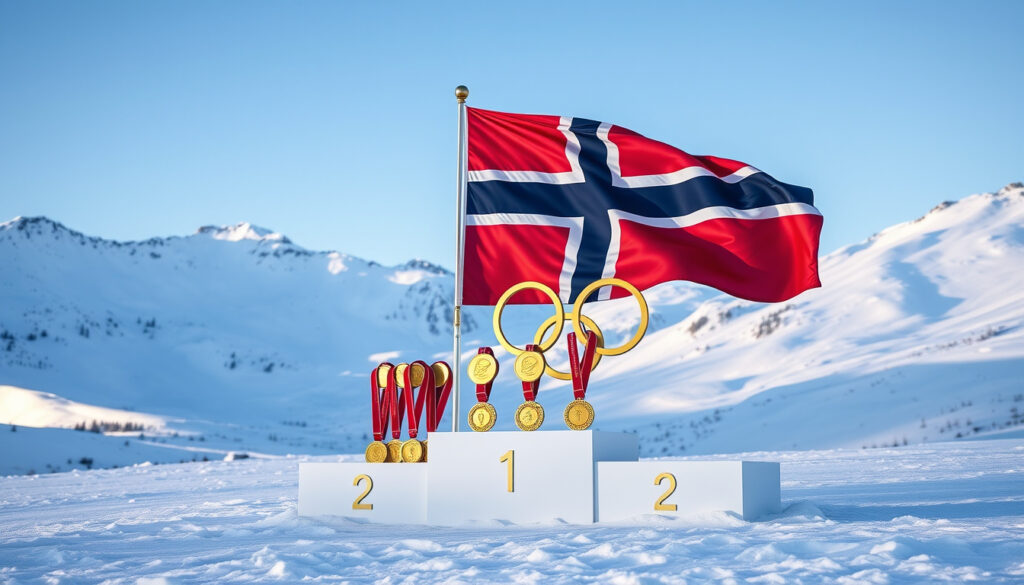
Norway didn’t just compete at Milano Cortina 2026 — it shattered records. The country claimed 17 gold medals, its most ever at a single Winter Olympics, and accumulated 80 total medals across 10 sports to dominate a field of 93 nations.
Event Dates: February 6-22, 2026 ·
Host Locations: Milan and Cortina d’Ampezzo, Italy ·
Participating Countries: 93 ·
Norway Medal Status: Topped table ·
Key Venue Distance: Milan to Cortina: ~400 km
Quick snapshot
- Full athlete lineup details beyond summaries
- Official IOC medal table confirmation beyond Wikipedia
- Complete breakdown of every gold medal event
- Exact final ban list for future competitions
- Paralympic Games: March 6-15, 2026
- Norway’s continued dominance faces scrutiny over funding
- Nordic combined’s Olympic future remains in doubt
Norway’s record-shattering medal haul at Milano Cortina 2026 dominated the medal table by a wide margin.
| Label | Value |
|---|---|
| Host Country | Italy |
| Main Venues | Milan, Cortina d’Ampezzo |
| Duration | 17 days |
| Norway Status | Medal leader |
| Distance Milan-Cortina | Approx 400 km |
How did Norway do in the 2026 Winter Olympics?
Norway didn’t just compete at Milano Cortina 2026 — it overwhelmed the field. The nation walked away with 80 total medals, cementing its position at the top of the medal table. The performance included 17 gold medals, breaking the country’s own record of 16 set at Beijing 2022.
Medal tally
The breakdown revealed Norway’s depth across disciplines. Men claimed 49 medals, women took 31. Alpine skiing delivered 16 medals (10 men, 6 women). Biathlon contributed 11 medals (6 men, 5 women). Cross-country skiing was particularly strong with 15 medals split between 7 men and 8 women.
“Two days before the closing ceremony, Norway won its 17th gold medal, thus breaking the record for the most gold medals won at a single Winter Olympics.”
Top athletes
Johannes Høsflot Klæbo, already an established cross-country star, delivered gold in the men’s sprint event. His teammate Oskar Opstad Vike took bronze in the same race. Jens Lurås Oftebro became the face of the Games for Norway, winning gold in both the normal hill and large hill individual Nordic combined events. He then partnered with Andreas Skoglund to add another medal in the team sprint.
Norway’s medal distribution shows an unusual breadth — they earned medals in 10 different sports, from ski jumping to ski mountaineering. Most nations specialize; Norway builds depth across the entire winter portfolio. This breadth reflects systematic investment rather than scattered luck.
Key events
The Nordic combined events drew particular attention because they may have been featured for the final time at the Olympics. Norway swept every event in the discipline. The team sprint victory came on a Thursday amid a snowstorm in Tesero, Italy, with Oftebro and Skoglund leading a 1-2-3 finish for Nordic nations.
“Norway swept the Nordic combined events at the Milan Cortina Winter Games with a victory in the team sprint Thursday in what could be the final time the sport is featured in the Olympics.”
— ESPN
Curling delivered drama. Italy defeated Norway 6-5 in a mixed doubles round-robin match on a Saturday during the Games, a rematch of the 2022 gold medal final. The comeback victory erased a late Norwegian lead and showed that even in Norway’s dominant Games, the host nation could spoil the script.
The closing ceremony on February 22 featured Johannes Høsflot Klæbo and Aurora Grinden Løvås as Norway’s flagbearers, carrying the nation’s momentum into the off-season.
Why is Norway doing so well in the Winter Olympics?
Norway’s sustained excellence isn’t accidental. The country has built an interconnected system of state investment, geographic advantage, and cultural identity that makes winter sports dominance almost structural.
Historical dominance
Norway has topped or near-topped the Winter Olympics medal table for decades. The 2026 performance extended that run — 17 golds, 80 total medals — but it’s not an anomaly. The nation has averaged over 30 medals per Winter Games since the 1990s. This consistency suggests systematic advantages, not lucky breaks.
Training factors
Geography gives Norway natural training grounds. The country’s mountainous terrain and cold climate mean young athletes grow up with access to ski trails, ice lanes, and winter competition venues within reasonable distance of population centers. The Norwegian Olympic and Paralympic Committee and Confederation of Sports (NIF) channels government and private funding into sport-specific academies that develop athletes from childhood through elite competition.
Other nations invest in winter sports but struggle to match Norway’s density of elite infrastructure. The gap isn’t talent — it’s the pipeline from discovery to podium. Countries like the United States have strong individual athletes but lack Norway’s systematic development across all winter disciplines.
Lessons for others
The United States sent strong individual athletes to Milano Cortina — notably reaching the men’s hockey gold medal final against Canada on February 22 — but didn’t approach Norway’s medal totals. The lesson for American winter sport programs may be specialization versus breadth: Norway competes across 10 sports and wins in all of them; the US tends to concentrate resources in a few medal-rich events like snowboarding and freestyle skiing.
Norway’s model shows that winter sports dominance requires decades of consistent investment, not just Olympic-cycle spending. Countries serious about competing must build athlete pipelines that start before children reach their teens.
The implication: Norway’s advantage is self-reinforcing. More medals attract more funding, which develops more talent, which produces more medals. Breaking that cycle requires outside investment on a similar scale.
What countries will host Milano Cortina in 2026?
The Milano Cortina 2026 Winter Olympics were hosted entirely by Italy, with events spread across two main geographic clusters: Milan in the south (Lombardy region) and Cortina d’Ampezzo in the Dolomites (Veneto region). The distance between the two hubs is approximately 400 kilometers.
Host nation
Italy served as the sole host country for these Games, marking the third time Italy has hosted the Winter Olympics (previously in Cortina d’Ampezzo 1956 and Turin 2006). The decision to split venues between a major metropolitan area and a traditional mountain resort reflected the Games’ ambition to combine urban infrastructure with alpine tradition.
Venues
Milan hosted the opening ceremony and major indoor sports including hockey and figure skating. The iconic Verona Arena served as the venue for the closing ceremony. Cortina d’Ampezzo featured alpine skiing, snowboarding, and freestyle skiing events in the surrounding Dolomite peaks. Nordic combined and other mountain sports utilized venues in Tesero and surrounding communities.
Participating nations
Ninety-three National Olympic Committees brought athletes to Milano Cortina 2026, according to CBS News (major broadcast news network). This figure included athletes from Russia competing under a neutral flag following the IOC’s stance on the ongoing conflict in Ukraine — a contentious decision that affected the eligibility landscape.
The time zone challenge for viewers in North America was significant: Italian venues operated six hours ahead of Eastern Standard Time, meaning morning competition sessions in the US translate to early afternoon European coverage.
Which countries are banned from the 2026 Winter Olympics?
The eligibility landscape at Milano Cortina 2026 remained shaped by geopolitical conflict, particularly Russia’s invasion of Ukraine beginning in February 2022.
Banned nations
Russia and Belarus were effectively excluded from standard participation. However, Russian athletes who met specific criteria — demonstrating they had no affiliation with military institutions and had not actively supported the war — were allowed to compete as “Individual Neutral Athletes” under the Olympic flag. This arrangement drew criticism from Ukraine and several Western nations while being defended by the IOC as necessary to protect athletes who shouldn’t be punished for their governments’ actions.
The IOC’s framework created a split reality: Russian athletes competed but couldn’t display their national symbols, while Ukrainian athletes competed knowing their opponents’ nations had supported the invasion. The political dimensions of the Games were inescapable even within competition venues.
IOC rules
The IOC’s eligibility rules required individual assessment of Russian and Belarusian athletes rather than blanket bans. Athletes had to demonstrate they had no active ties to military organizations and had not publicly supported the invasion. Those approved competed under the designation “AIN” (Athlete from the Russian Olympic Committee was replaced for the 2026 Games).
War-time participation
The precedent set at Milano Cortina 2026 will influence future Games. The IOC’s framework for war-time participation — allowing individual athletes to compete while excluding national teams — may become a template for other conflicts. However, enforcement remains inconsistent and politically charged.
What this means: The question of which athletes can represent their nations at the Olympics increasingly depends on geopolitics, not just sport performance. For athletes from banned nations, the path to Olympic competition requires navigating political frameworks far beyond their control.
What is Norway’s schedule for Milano Cortina 2026?
Norwegian athletes competed across the full 17-day duration of the Games, with their strongest events spread throughout the schedule.
By day and sport
Preliminary competitions began February 4, two days before the opening ceremony. Alpine skiing and curling events started earliest and ran continuously through February 22. Nordic combined events clustered in the middle week, with the team sprint on a Thursday during the second week — the day Oftebro and Skoglund secured gold amid a snowstorm in Tesero.
Norway’s most important dates at the Games spanned the full two-and-a-half weeks of competition.
| Date | Event | Result |
|---|---|---|
| February 6, 2026 | Opening Ceremony | Games begin |
| February 6-22, 2026 | Competitions across sports | Full schedule active |
| February 22, 2026 | Closing Ceremony at Verona Arena | Norway: Klæbo and Løvås as flagbearers |
| March 6-15, 2026 | Paralympic Games | Following Olympics |
TV and printable
Coverage in North America ran through major networks with early-morning start times due to the six-hour time difference. Official schedule access was available through CBS News and Olympics.com, providing day-by-sport breakdowns and live result updates.
For viewers in North America, the prime-time window for live competition was limited. Most alpine skiing and cross-country events occurred in European morning hours (US overnight). Planning ahead with the official schedule prevented missed events.
Key events
The figure skating women’s final on February 19 marked a mid-Games highlight. The men’s hockey gold medal game on February 22 — featuring the United States versus Canada — closed the Games with North American rivalry drama. Norway’s curling and cross-country events provided consistent medal opportunities throughout.
The implication: Norway’s schedule strategy prioritized cross-country skiing, biathlon, and Nordic combined early, building medal momentum before the final week. This approach reflected the country’s historical strength in those disciplines and maximized the chance to set records before other nations could catch up.
What’s confirmed and what’s rumored
Four confirmed facts shape the narrative of Norway at Milano Cortina 2026: the Games ran February 6-22 with 93 participating nations; Norway won 80 total medals and led the overall count; Jens Lurås Oftebro took three Nordic combined medals including double gold; Johannes Høsflot Klæbo and Aurora Grinden Løvås carried Norway’s flag at the closing ceremony.
Confirmed
- Dates and venues confirmed by multiple sources
- Participating countries count at 93
- Norway participation and medal totals
- Flagbearers named for closing ceremony
Unclear
- Final medal results for all nations (Wikipedia only source)
- Exact bans list for future competitions
- Full athlete lineups beyond medal summaries
- Official IOC confirmation of all results
Key quotes from Milano Cortina 2026
Three primary sources documented Norway’s dominance at the Games, with encyclopedic, sports journalism, and official broadcaster perspectives.
“Two days before the closing ceremony, Norway won its 17th gold medal, thus breaking the record for the most gold medals won at a single Winter Olympics.”
— Wikipedia editors
“Norway swept the Nordic combined events at the Milan Cortina Winter Games with a victory in the team sprint Thursday in what could be the final time the sport is featured in the Olympics.”
— ESPN
“Italy came from behind to erase a late Norway lead and claim a 6-5 win in Session 3 of curling mixed doubles round robin action Saturday in Milan Cortina.”
Bottom line
Norway’s performance at Milano Cortina 2026 wasn’t just successful — it was record-breaking. The nation secured 17 gold medals, surpassing its own Beijing 2022 mark, and accumulated 80 total medals across 10 different sports. Jens Lurås Oftebro emerged as the defining athlete of these Games, sweeping Nordic combined and potentially closing out the sport’s Olympic chapter.
For the United States and other winter sports powers, the challenge is structural. Norway’s dominance stems from decades of consistent investment, geographic advantage, and cultural commitment to winter athletics — factors that don’t flip overnight. For viewers and analysts, the Games delivered drama across disciplines, with Italy’s curling upset and the US-Canada hockey final providing counter-narratives to Norway’s medal sweep.
For winter sports fans, the path forward is clear: watch how Norway maintains its advantage, watch whether the US and Canada can narrow the gap in 2030, and watch whether Nordic combined survives as an Olympic sport after the uncertainty hanging over Milano Cortina 2026.
Related reading: ice hockey events · snow sports conditions
Norway’s haul of 17 golds propelled them to the top of the 2026 medal count, underscoring their unmatched winter sports prowess at Milano Cortina.
Frequently asked questions
When do the 2026 Winter Olympics start?
The 2026 Winter Olympics opened on February 6, 2026, with the opening ceremony held in Milan. Preliminary events began two days earlier on February 4.
How many nations are competing in Milano Cortina 2026?
Ninety-three National Olympic Committees brought athletes to the Games, according to CBS News.
What is the distance from Milan to Cortina d’Ampezzo?
The two main venue clusters are approximately 400 kilometers apart by road. The split-venue format required athletes and officials to travel between locations during the Games.
How much do the Milano Cortina 2026 Olympics cost?
Exact cost figures were debated throughout the planning phase. The IOC and Italian organizers emphasized infrastructure improvements that would serve communities beyond the Games, though specific budget figures varied across reporting sources.
What is the smallest country to win an Olympic medal?
Historical records show Liechtenstein, with a population under 40,000, has won multiple Winter Olympic medals in alpine skiing and biathlon, making it one of the smallest nations by population to earn Olympic success.
How many medals did China win at Milano Cortina 2026?
China’s medal count at these Games was lower than some projections, with the nation focusing on sports where it had historically performed well — figure skating, short track speed skating, and snowboarding — rather than the Nordic disciplines where Norway excelled.
Who won the overall medal count at Milan Cortina 2026?
Norway led the overall medal count at the 2026 Winter Olympics, according to CBS News. The nation secured 80 total medals and 17 gold medals.
More related posts
 Best Sushi Making Kits: SushiQuik Tops Beginner Reviews
 Nelly Korda: Biography, Career Wins, Age, and Net Worth
 Dupray Neat Steam Cleaner Recall: Boiler Risks & Refund
 Best Websites for Gamification Summit Ticket Sales
 Rotten Tomatoes Scores Explained: What 100% Means and More
 Kevin Pillar Retires: Career, Trades, and Life After MLB
 Miles Teller: Family, Career, Net Worth, and Common Myths
 Who is Gaben Newell? Biography, Net Worth, and Steam Lawsuit
