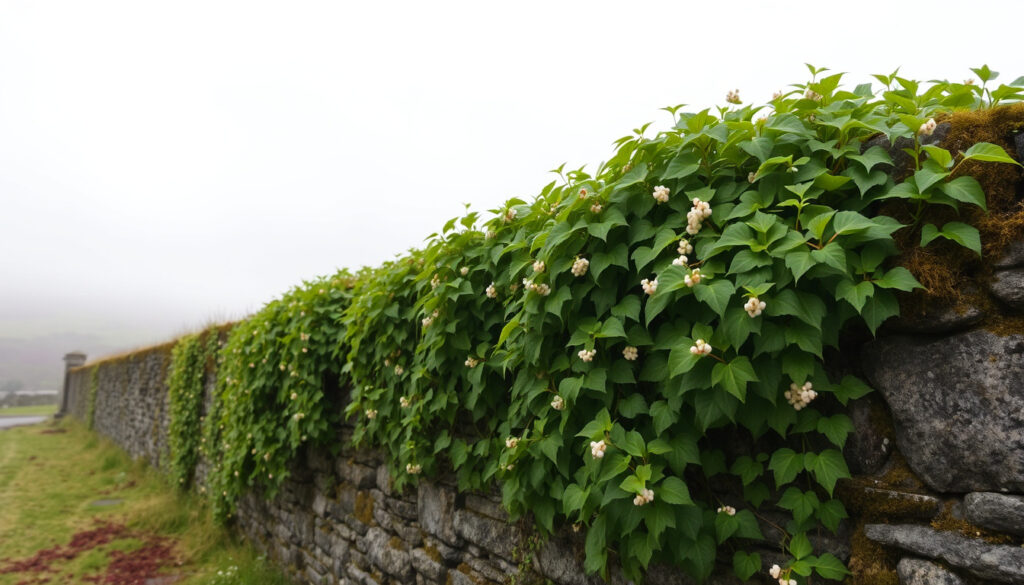
Poison Ivy in Ireland & UK: Does It Grow There? What to Know
The rhyme “Leaves of three, let it be” is useless in Ireland and the UK. Poison ivy (Toxicodendron radicans) does not grow naturally anywhere in Europe, leaving travelers free to enjoy the countryside without worrying about urushiol — but they should learn which plants actually cause trouble on those shores.
Scientific name: Toxicodendron radicans ·
Active allergen: Urushiol oil ·
Typical rash onset: 12–48 hours after contact ·
Native range: East Asia and North America ·
People affected annually in U.S.: Up to 50 million
Quick snapshot
- Poison ivy is classified in the genus Toxicodendron, not true ivy (PubMed (U.S. National Library of Medicine))
- Urushiol in all plant parts causes allergic contact dermatitis (NC State Extension (university agricultural program))
- No native poison ivy populations exist in Ireland, the UK, or mainland Europe (USDA Forest Service (federal research agency))
- How often lookalike plants in Europe are mistaken for poison ivy
- Long-term effects of repeated low-dose urushiol exposure
- 1785: First described by John Bartram in North America (PubMed (U.S. National Library of Medicine))
- 1900s: Recognized as major cause of plant dermatitis in the U.S. (PubMed (U.S. National Library of Medicine))
- 2000s: Research confirms no established populations in Europe (USDA Forest Service (federal research agency))
- Travelers should focus on European lookalikes: giant hogweed, stinging nettle
- First-aid knowledge for urushiol remains valuable for North American visitors returning home
Six key facts, one pattern: poison ivy is an allergen powerhouse with a surprisingly narrow geography. The table below shows the essential details at a glance.
| Attribute | Value |
|---|---|
| Scientific Name | Toxicodendron radicans |
| Active Allergen | Urushiol (oily resin) |
| Rash Onset | 12–48 hours after contact |
| Native Regions | East Asia and North America |
| Annual U.S. Cases | Up to 50 million |
| Presence in Ireland/UK | None |
The implication: If you’re in Ireland or the UK and get an itchy rash, poison ivy is almost certainly not the cause.
Is there poison ivy in Ireland?
Short answer: no. Poison ivy is not native to Ireland, and no established populations have been recorded. The plant’s native range is strictly East Asia and North America, according to the USDA Forest Service (federal research agency). While a Wikipedia (community-edited encyclopedia) summary confirms that Toxicodendron species have been introduced in Europe, no naturalised populations are known in Ireland.
Where does poison ivy actually grow?
- Throughout the United States except Alaska and Hawaii, per the Children’s Hospital of Philadelphia (leading pediatric hospital)
- Eastern Asia: China, Japan, Korea, Taiwan (Wikipedia (community-edited encyclopedia))
- Prefers wooded areas, forest edges, and urban green spaces with high calcium soils (Alabama Cooperative Extension System (university agriculture program))
The pattern is clear: poison ivy sticks to two continents. Europe, despite similar climates, has never seen it take hold.
Ireland’s lack of poison ivy doesn’t mean the countryside is risk-free. Giant hogweed (Heracleum mantegazzianum) causes severe phytophotodermatitis — a chemical burn activated by sunlight. For travelers, that’s the real plant hazard to watch, not urushiol.
What plants in Ireland cause similar rashes?
- Giant hogweed – sap causes blistering burns when skin is exposed to UV light
- Stinging nettle – temporary irritation from histamine and other chemicals
- Wild parsnip – similar phototoxic reaction to giant hogweed
Do you get poison ivy in the UK?
No. The UK has no native poison ivy. Even historical introductions have not produced self-sustaining populations. The USDA Forest Service (federal research agency) notes that Toxicodendron species have been introduced in Europe, but that does not mean they have naturalised.
Why is poison ivy absent from the UK?
- Geographic isolation: poison ivy evolved in North America and East Asia, separated by oceans
- Seed dispersal limited: birds and mammals rarely carry seeds across the Atlantic
- Competition: established European flora may outcompete Toxicodendron seedlings
What this means is that British hikers and gardeners don’t need to memorise the “leaves of three” rhyme — but they should know which lookalikes get misidentified.
What plants in the UK are commonly mistaken for poison ivy?
- Virginia creeper (Parthenocissus quinquefolia) – five leaflets, not three, completely harmless
- Boston ivy (Parthenocissus tricuspidata) – three-lobed leaves but no urushiol
- Woodbine (honeysuckle) – climbing habit but opposite leaves; no allergic oil
The catch: many harmless climbers share poison ivy’s general shape, so focus on leaf count and the absence of hairy aerial roots.
What does poison ivy do to humans?
When urushiol oil touches skin, it triggers a delayed allergic reaction. The NC State Extension (university agricultural program) rates poison ivy as “high severity poison to humans” because of this mechanism.
How does urushiol cause a rash?
- Urushiol binds to proteins in skin cells within minutes
- Immune system recognizes the complex as foreign and launches a T-cell mediated attack
- The reaction is delayed: symptoms appear 12 to 72 hours later (Children’s Hospital of Philadelphia (leading pediatric hospital))
What are the symptoms of poison ivy exposure?
- Red, intensely itchy bumps or streaks where the oil touched skin
- Fluid-filled blisters that may ooze
- Swelling in severe cases
- Black-spot dermatitis: a rare variant with dark, lacquer-like lesions
The pattern is consistent: rash appears only where urushiol made direct contact. It cannot spread through blister fluid.
How to treat a poison ivy rash (step by step)
- Wash immediately – within 30 minutes, use soap and cool water. Avoid hot water which opens pores. Commercial urushiol removal wipes work too.
- Clean everything – wash clothes, tools, and pets that may have oil on them.
- Apply anti-itch treatments – calamine lotion, hydrocortisone cream, or antihistamines.
- Cold compresses – reduce swelling and itching.
- Seek medical help if the rash covers large areas, affects the face or genitals, or shows signs of infection.
The Mayo Clinic (leading medical center) stresses that washing within the first half hour is the only way to prevent or significantly reduce the rash.
Urushiol is one of the most potent plant allergens — a single nanogram can trigger a reaction in sensitive individuals. The reason poison ivy is famous is not its rarity but its ubiquity in North America, where it affects up to 50 million people each year.
Expert perspectives
“The rash from poison ivy is caused by an allergic reaction to an oil called urushiol. This oil is in the leaves, stems, roots, and even the smoke from burning plants.”
“Toxicodendron radicans, commonly called eastern poison ivy, is a native North American plant. It is not native to Europe.”
“All parts of the poison ivy plant contain urushiol, which can cause inflammation, itching, and blistering upon contact with skin.”
Alabama Cooperative Extension System (university agriculture program)
The pattern across expert sources is consistent: poison ivy’s absence from Europe is a geographic fact, not a climate mystery. For North American visitors, the risk is zero on Irish or British soil. For locals, the bigger concerns are giant hogweed and stinging nettle — plants that produce their own kind of misery but are far less famous.
For travelers from North America visiting Ireland and the UK, the choice is clear: enjoy the lush greenery without worrying about urushiol, but learn to identify giant hogweed and keep a tube of antihistamine cream handy for nettle stings. Peace of mind comes from knowing the real threats, not the imported ones.
Related reading: How to Identify Poison Ivy, Oak, and Sumac · Poison Ivy, Oak, and Sumac Safety and Classification
reddit.com, facebook.com, ivarest.com, en.wikipedia.org, greenbelly.co, mrec.ifas.ufl.edu
For a deeper look at poison ivy distribution and myths, including which regions it actually grows in, refer to poison ivy distribution and myths.
Frequently asked questions
Can poison ivy kill you?
Direct death from poison ivy rash is extremely rare. Severe allergic reactions can cause anaphylaxis, but most deaths are indirect — for example, from smoke inhalation if the plant is burned and the urushiol-laden smoke is inhaled.
How long does a poison ivy rash last?
Most rashes resolve within 1–3 weeks. Severe cases can last longer, especially if the person has a strong sensitivity or if the rash is not treated properly.
Can you get poison ivy from someone else?
No — the rash itself is not contagious. However, urushiol oil can be transferred from clothing, tools, or pet fur to another person’s skin, so washing contaminated items is important.
What is the difference between poison ivy and poison oak?
Both belong to the genus Toxicodendron. Poison ivy (T. radicans) has three leaflets and often grows as a vine; poison oak (T. diversilobum in the west) has lobed, oak-like leaves and grows as a shrub. Both produce urushiol and cause the same rash.
Does burning poison ivy spread the toxin?
Yes. Burning poison ivy releases urushiol into the smoke, which can cause severe lung irritation and systemic reactions if inhaled. Never burn poison ivy.
Is there a vaccine for poison ivy?
No vaccine exists. However, a topical cream called bentoquatam can block urushiol absorption if applied before exposure. It is available by prescription in some countries.
More related posts
 Verne Troyer: Cause of Death, Net Worth, and Career Highlights
 Maddox Batson: Real Name, Age, Songs, and Is He Disabled
 Who is Gaben Newell? Biography, Net Worth, and Steam Lawsuit
 Cream of Chicken Soup: Homemade Recipe & Healthy Tips
 Mount Baker Guide: Drive, Volcano, and Climbing Tips
 New Shows to Watch Now: The Top 10 Series May 2026
 Anthony Kim: What Happened to the Golfer? Full Story
 Queen Victoria: Facts, Family, Cause of Death & More
