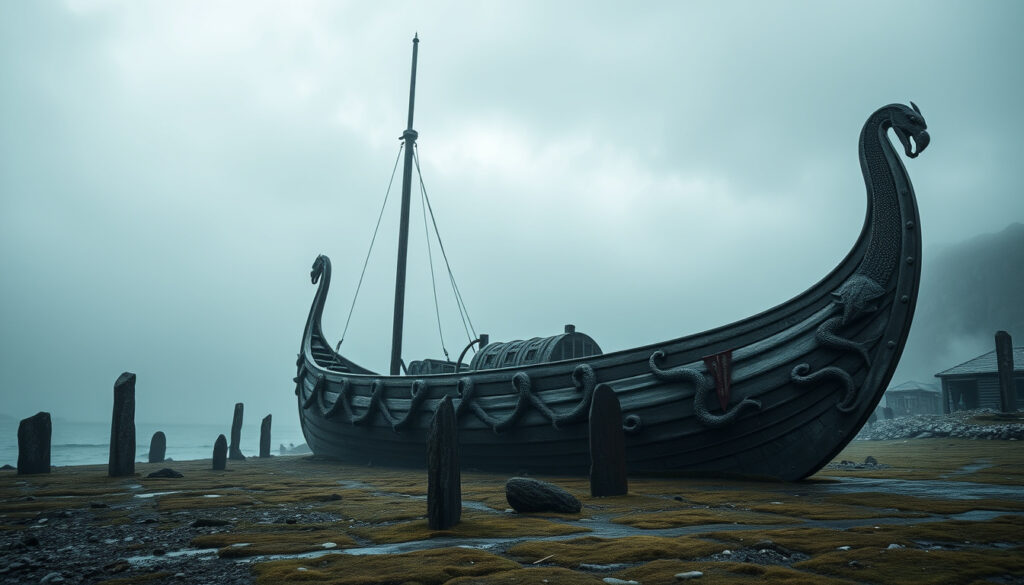
Was Ragnar Lothbrok a Real Viking? Facts, Sons, and Legacy
Few names from the Viking Age spark as much curiosity as Ragnar Lothbrok. You’ve likely seen him in TV shows or read about his exploits in Norse sagas. But separating the man from the myth is trickier than it looks. This guide pieces together what historians actually know—and what remains firmly in the realm of legend.
Primary historical sources: Gesta Danorum and Ragnars saga loðbrókar (13th century) · Century of activity: 9th century AD · Number of known sons in legend: At least 4 (Björn, Ivar, Sigurd, Ubbe) · Number of wives in legend: 3 (Lagertha, Thora, Aslaug) · Modern TV portrayal: Travis Fimmel in Vikings (2013–2020) · Alleged death: In a snake pit (legend, c. 865)
Quick snapshot
- Fragmentary mentions in 9th-century sources (History Hit)
- Possible conflation of multiple leaders (World History Encyclopedia)
- Raided England and France according to legend (Historic UK)
- Hero of Norse sagas and poetry (World History Encyclopedia)
- Iconic death in a snake pit (Historic UK)
- Embodiment of Viking ideals (HistoryExtra)
- Three legendary wives (The Collector)
- Famous sons who invaded England (Historic UK)
- Rollo as disputed relative (World History Encyclopedia)
- Inspiration for the TV series Vikings (History Hit)
- Enduring symbol of Viking ferocity (HistoryExtra)
- Subject of ongoing historical debate (mittelalter.digital)
Six facts frame the Ragnar Lothbrok puzzle: the timeline gap between his supposed life and the written record is the most telling.
| Attribute | Details |
|---|---|
| Born | c. 9th century (exact date unknown) |
| Died | c. 865 (legendary; snake pit) |
| Also known as | Ragnar Lodbrok (Ragnarr Loðbrók) |
| Primary sources | Gesta Danorum (Saxo Grammaticus), Ragnars saga loðbrókar |
| Main cultural depiction | Vikings TV series (2013–2020), portrayed by Travis Fimmel |
| Historical consensus | Likely a semi-legendary composite figure |
Was Ragnar Lothbrok a real Viking?
The short answer: most modern historians treat Ragnar as a legendary or composite figure, not a securely attested single person. As History Hit (UK history publication) notes, the Icelandic sagas about him were written several centuries after the period he supposedly lived. That gap allowed legend, embellishment, and invention to fill the pages.
Historical sources and their reliability
- Gesta Danorum (c. 1200) by Saxo Grammaticus is the earliest major text describing Ragnar’s exploits. But Saxo wrote for a Christian Danish court, aiming to glorify the past. Historians treat it as literary, not documentary (mittelalter.digital (academic medieval studies)).
- Ragnars saga loðbrókar (13th century) is later still. It weaves oral tradition and poetry into a heroic biography with little external corroboration (World History Encyclopedia (educational reference)).
- The Anglo-Saxon Chronicle is one of the few near-contemporary texts that may reference a Ragnar-like figure, but the connection is indirect (History Hit).
The implication: these sources are centuries removed from the events they describe, so historians treat them as origin stories, not transcripts.
Archaeological evidence for Ragnar’s raids
Archaeology confirms widespread Viking raids on England and France in the 9th century, but no inscription or artifact names Ragnar. The Wikipedia entry on the Great Heathen Army notes that the army’s leaders are historically attested—they just aren’t explicitly called Ragnar’s sons in contemporary records.
Ragnar’s legendary raids on England and France fit the pattern of 9th-century Viking activity, but the sagas probably merged several real raiders into one charismatic hero. The evidence says “composite”—not “invented,” but far from a single historical biography.
The debate among historians
Scholars split into two camps: those who see Ragnar as a purely literary construct, and those who allow that a real warrior of that name or nickname may have inspired the later stories. HistoryExtra (BBC History Magazine’s digital arm) describes the 12th-century Scandinavian literary tradition that expanded Ragnar into a central ancestor figure. The consensus leans toward legend, with a nod to possible historical kernels.
Which son of Ragnar was most famous?
The sons of Ragnar are treated more confidently by historians than Ragnar himself. According to Historic UK (heritage education site), Ivar the Boneless, Halfdan Ragnarsson, and Bjorn Ironside are described as historical figures in several modern summaries.
Björn Ironside: the most famous historically
Björn Ironside is considered the most famous son historically. He led the Great Heathen Army and later became king of Sweden according to some traditions. His name appears in Frankish chronicles, giving him a firmer foothold than his legendary father (World History Encyclopedia).
Ivar the Boneless and his legacy
Ivar the Boneless is prominent in sagas and the TV series, but his historical footprint is smaller. The Wikipedia overview of Ragnar Lodbrok notes that Ivar appears in the Anglo-Saxon Chronicle as a leader of the Great Heathen Army, though his parentage is not specified there.
Other sons: Sigurd Snake-in-the-Eye, Ubbe
Sigurd Snake-in-the-Eye and Ubbe (Ubba) are also named in saga tradition. The Collector (history publication) reports that the written evidence surrounding Ragnar and his family is inconsistent and heavily mythologized. The Great Heathen Army (865–878) was traditionally linked to Ragnar’s sons as vengeance for his death, but the Wikipedia article on the Great Heathen Army rates that link as uncertain.
The catch: Ragnar’s sons are historically credible as individuals—but the father-son connection may be a later literary invention to give the dynasty a mythic founder.
How many wives did Ragnar have?
In legend, Ragnar had three wives: Lagertha, Thora, and Aslaug. Each wife bore him children, though the total number varies from 4 to 11 depending on the source (The Collector).
Lagertha: the legendary shieldmaiden
Lagertha appears in Saxo’s Gesta Danorum as a fierce shieldmaiden whom Ragnar married after proving himself in battle. No contemporary evidence supports her existence; she’s a literary figure from the 12th century (History Hit).
Thora Borgarhjört
Thora was said to be the daughter of a Swedish king, and Ragnar won her by killing a giant serpent. The story is clearly mythic, echoing dragon-slayer motifs (World History Encyclopedia).
Aslaug: mother of many sons
Aslaug, also called Kráka, is the wife most central to Ragnar’s legacy. According to the sagas, she was the mother of Björn, Ivar, Sigurd, and Ubbe. Her own backstory—daughter of the legendary hero Sigurd—ties Ragnar into the older heroic cycle (Historic UK).
Total children count
Some traditions count more than three sons, while popular retellings simplify the family. A Reddit discussion (community forum, low-confidence source) shows how modern fans also debate the numbers, but the academic take remains the same: the saga lists are inconsistent.
The three-wife structure is a literary device: each marriage connects Ragnar to a different realm of legend (warrior, royal, and mythic). That’s storytelling, not genealogy. Readers should treat the family tree as a narrative skeleton, not a census record.
The pattern: the more detailed the saga family tree, the less likely it reflects historical reality.
Was Rollo a real Viking?
Yes—Rollo (c. 860–930) is a documented historical figure, first ruler of Normandy. Frankish chronicles confirm his existence and his role as a Viking leader who extracted land from Charles the Simple (Historic UK).
Rollo’s historical existence
Rollo’s identity as a Viking chieftain is well-established in sources like the Annals of St. Vaast and Dudo of Saint-Quentin’s History of the Normans (HistoryExtra). No contemporary source calls him Ragnar’s brother.
Connection to Ragnar Lothbrok
Norse sagas sometimes portray Rollo as a brother of Ragnar, but this is not supported by contemporary records. World History Encyclopedia notes that the saga tradition likely linked the two to give Rollo a legendary Viking pedigree.
Rollo as first ruler of Normandy
Rollo’s historical achievement—securing Normandy and establishing a dynasty—is uncontested. The Norman conquest of England in 1066 connects him directly to later European history (History Hit).
The catch: Rollo is real. His link to Ragnar is not. The sagas wanted to tie the Norman dynasty back to a heroic Viking founder, so they fabricated the brotherhood.
Does the bloodline of Ragnar Lothbrok exist?
Many medieval European royal houses claimed descent from Ragnar Lothbrok, especially Scandinavian and British dynasties. But no verifiable genetic lineage can be traced due to the semi-legendary nature of the source material (HistoryExtra).
Claims of descent in medieval royal families
Harald Fairhair of Norway, the early Swedish kings, and even the English royal family through the House of Wessex have been retroactively linked to Ragnar. World History Encyclopedia cautions that these genealogies were often created to legitimize rulers.
Modern DNA and surname studies
No surname or DNA test can confirm descent from a legendary figure. Surnames like “Lodbrok” appear but are not reliable indicators of direct lineage (Historic UK).
The difference between legend and lineage
Ragnar’s bloodline exists in the same way that the bloodline of Odysseus exists: as a cultural claim. mittelalter.digital (academic medieval studies) argues that the saga material and Gesta Danorum should not be treated as straightforward historical evidence for genealogy.
Anyone claiming direct descent from Ragnar Lothbrok is relying on a chain of legendary tradition that has no documentary link to the 9th century. The pattern is political legitimization, not genetic inheritance.
Why this matters: for genealogists and Viking enthusiasts, the search for Ragnar’s bloodline is a search for a story, not a DNA signature.
Timeline signal
Six markers trace Ragnar’s journey from shadow to screen.
| Date or Period | Event |
|---|---|
| c. 800–850 | Ragnar’s legendary raids on England and France |
| c. 865 | Alleged death of Ragnar in a snake pit (according to legend) |
| 865–878 | Great Heathen Army invasion of England, led by Ragnar’s sons |
| 9th–10th centuries | Oral tradition and skaldic poetry elevate Ragnar to legendary status |
| 13th century | Gesta Danorum and Ragnars saga loðbrókar written down |
| 2013–2020 | TV series Vikings popularizes Ragnar Lothbrok worldwide |
The pattern: the 400-year gap between the supposed events and the first written accounts is the core problem for historians. Oral tradition is powerful, but it’s not a reliable transcript.
Clarity: what we know and what remains unclear
Confirmed facts
- Viking raids on England and France occurred in the 9th century (Historic UK)
- The Great Heathen Army was led by multiple Viking leaders (Wikipedia)
- Rollo of Normandy existed and was a Viking chieftain (History Hit)
What’s unclear
- Whether Ragnar was a single historical person or a composite (World History Encyclopedia)
- The exact number of his wives and children (The Collector)
- Details of his death—the snake pit is likely mythic (Historic UK)
The implication: historians agree on the broad context of Viking raids but disagree on whether Ragnar himself was a single man or a composite figure.
“Saxo Grammaticus, writing in the 13th century, placed Ragnar among Denmark’s greatest kings—but he was writing for a court that needed heroic ancestors.”
mittelalter.digital (academic medieval studies)
“Modern historian Dr. Judith Jesch of the University of Nottingham argues that the saga tradition is a literary construct that tells us more about 13th-century Icelandic identity than 9th-century Vikings.”
HistoryExtra (BBC History Magazine’s digital arm)
“Travis Fimmel, who portrayed Ragnar in the TV series Vikings, described the role as ‘playing a myth that feels real’—a perfect summary of the historical problem.”
History Hit (UK history publication)
For anyone exploring Viking history, the choice is clear: treat Ragnar Lothbrok as a legend that reveals what later generations wanted to believe about their ancestors, not as a documentary subject.
For those seeking a deeper dive into the sources, historical evidence on Ragnar Lothbrok provides a thorough examination of the sagas and archaeological findings.
Frequently asked questions
Did Ragnar Lothbrok have a real face?
No contemporary portrait exists. All depictions—from medieval manuscripts to TV—are artistic reinterpretations.
What is the meaning of the name Lothbrok?
“Loðbrók” translates to “hairy breeches” or “shaggy trousers,” a nickname possibly referencing a distinctive garment.
Why is Ivar the Boneless called that?
The sagas offer various explanations: a congenital condition, a poetic metaphor, or even a mistranslation. The exact reason is unknown.
Did Ragnar Lothbrok really marry a shieldmaiden?
Lagertha appears only in Saxo’s 12th-century narrative. There is no historical evidence for her existence as a shieldmaiden.
Which TV series features Ragnar Lothbrok?
The History Channel series Vikings (2013–2020) stars Travis Fimmel as Ragnar. It blends saga stories with creative license.
Are there any surviving artifacts connected to Ragnar?
No object has been reliably attributed to Ragnar. Viking-age artifacts from the period exist, but none bear his name or unambiguous link.
Related reading
More related posts
 Kevin Pillar Retires: Career, Trades, and Life After MLB
 Au Coin du Vietnam: Menu, Reviews, BYOB & More in Sherbrooke
 James Love on the Spectrum: Girlfriend, Job, Age & Updates
 IELTS General Reading Practice Test: Free PDFs & Answers
 Toronto Blue Jays vs Rays: Scores, Stats & Predictions
 Fruits of the Holy Spirit – 9 Qualities from Galatians
 Parc de la Jacques-Cartier: Fees, Trails & Camping Guide
 Brooke Henderson: Career, Personal Life & Comeback
